
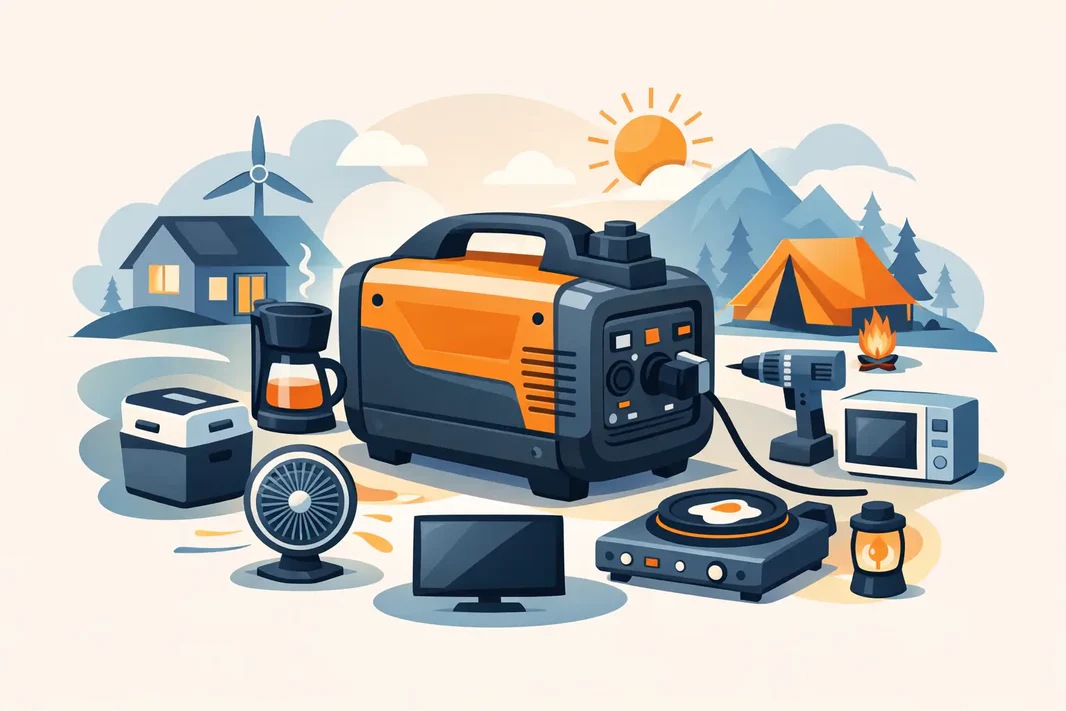
A 2000 watt generator sounds simple until the power goes out and you start doing the math in your head. What can a 2000 watt generator run? In most cases, it can cover the essentials – think a refrigerator, lights, phone chargers, a TV, a laptop, a fan, and a few small kitchen appliances. What it usually cannot do is run multiple high-draw appliances at once or power large electric heating and cooling equipment.
That distinction matters because generator sizing is less about the single biggest item and more about what needs to start and run at the same time. A 2000 watt unit can be a smart fit for camping, tailgating, RV use, job sites with lighter tools, and short-term backup for critical home items. It is not the right answer for whole-home backup or heavy electric loads.
What can a 2000 watt generator run in real life?
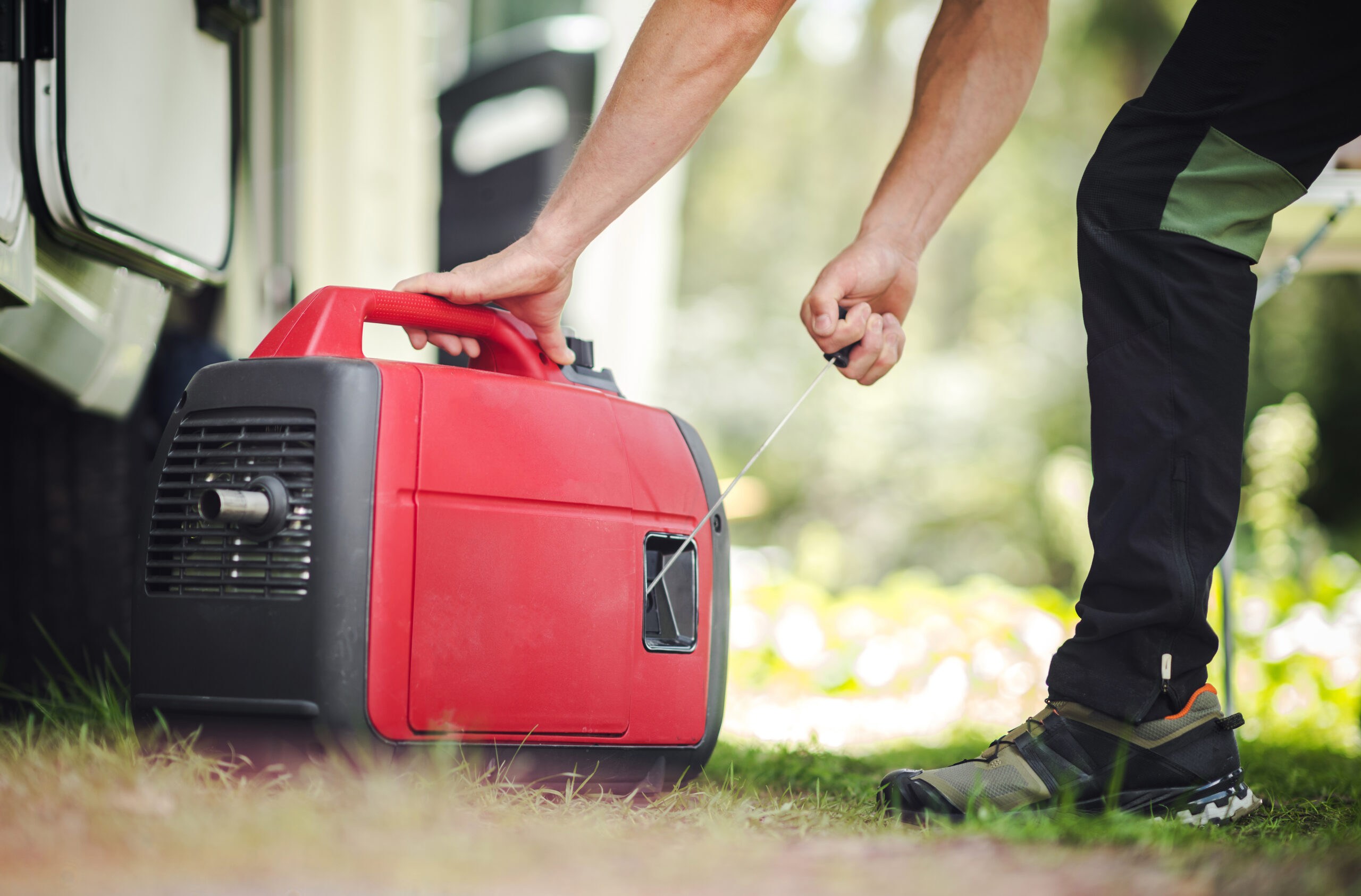
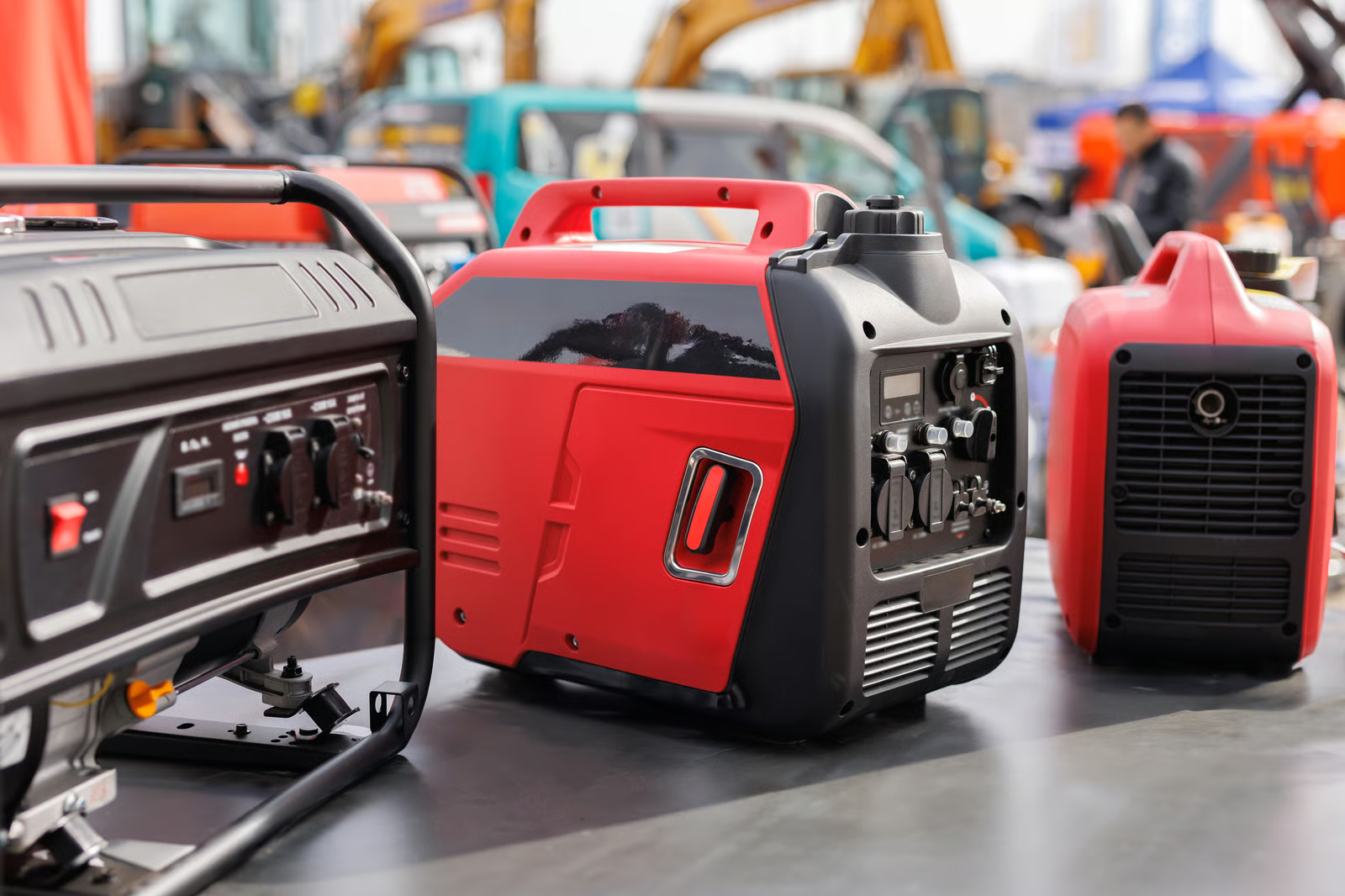
For most buyers, a 2000 watt generator sits in the sweet spot between portability and usefulness. It is small enough to move around without much trouble, fuel-efficient compared with larger models, and often quiet enough for camping or neighborhood use if you choose an inverter style. But capacity is still limited, so expectations need to be realistic.
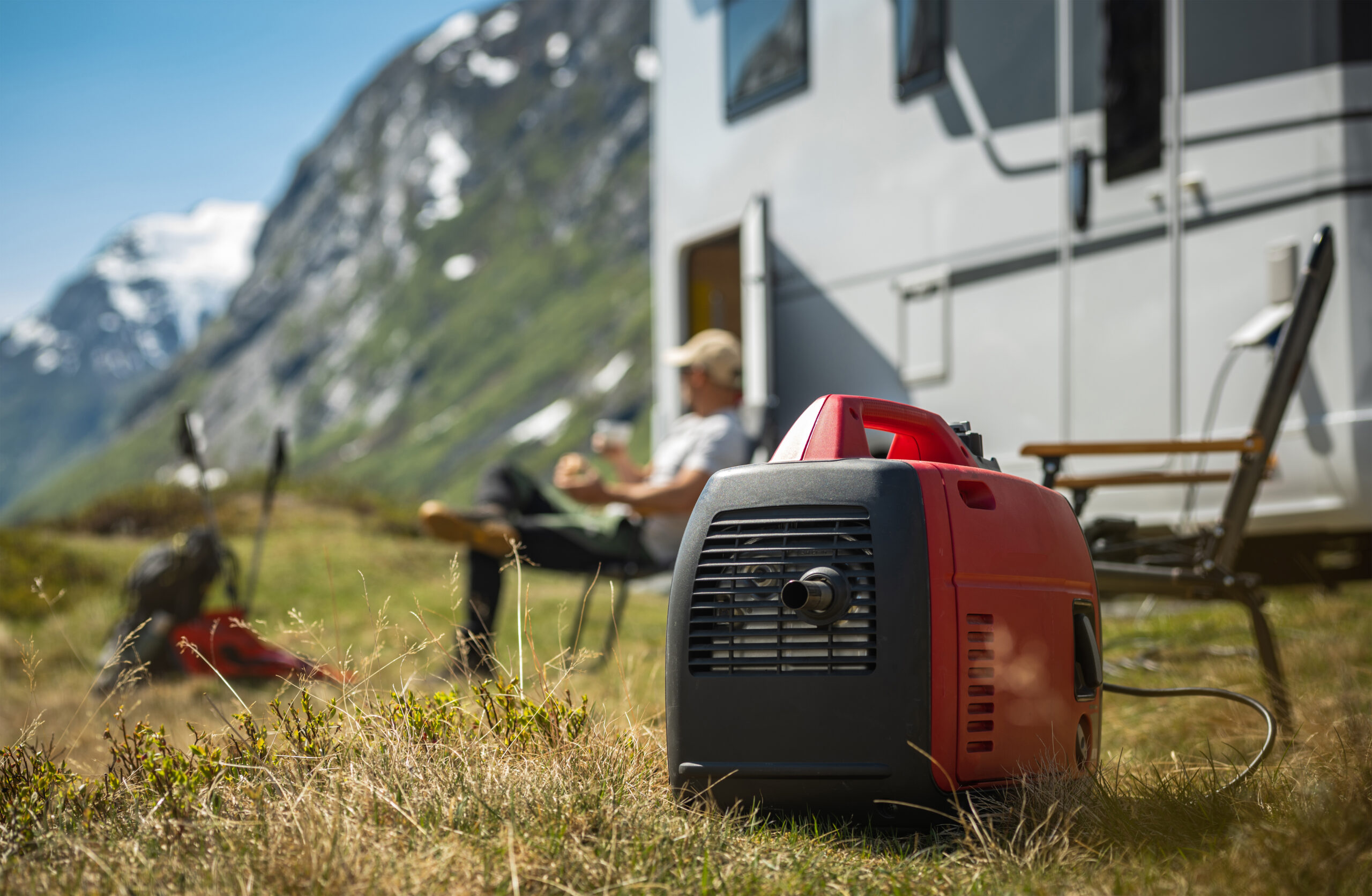
A typical 2000 watt generator can usually run one medium-startup appliance plus several low-watt items. For example, you may be able to keep a full-size refrigerator going while also powering a few LED lights, a modem, and a phone charger. In an RV, it can often run the microwave briefly, recharge batteries, operate lights, and support a coffee maker or TV. On a campsite, it can easily handle chargers, small cooking devices, lights, and fans.
Where people get into trouble is trying to run too many heat-producing appliances at once. Hair dryers, electric skillets, toasters, space heaters, and portable air conditioners can chew through available wattage fast. Even if one item fits on paper, adding another can push the generator past its limit.
Running watts vs starting watts
To know what a 2000 watt generator can run, you need to look beyond the number on the box. Most appliances have running watts, which is the power they need to keep operating, and starting watts, which is the temporary surge needed when motors kick on.
That surge is why a refrigerator that runs at 600 watts might still need 1200 to 1800 watts for startup. The same goes for freezers, sump pumps, and many power tools. If your generator can handle the running load but not the startup spike, the appliance may fail to start or trip the overload protection.
Some 2000 watt generators are rated around 1600 to 1800 running watts with 2000 peak watts. Others may have slightly different numbers. That is why the real usable capacity is often lower than people assume.
Common appliances a 2000 watt generator can usually handle
For home backup, a 2000 watt generator is best used strategically. It can usually power a refrigerator or freezer, several LED light bulbs, internet equipment, phone chargers, a laptop, a television, and perhaps a box fan or small fan. If you rotate loads instead of running everything together, you can get more practical value from it.
In the kitchen, it can often handle a coffee maker, blender, microwave, or toaster one at a time. The phrase one at a time is the key. A microwave plus a coffee maker plus a refrigerator cycling on is where problems start.
For outdoor and mobile use, it is often enough for CPAP machines, electric grills with modest power draw, portable speakers, battery chargers, and compact cooking gear. Many RV owners use 2000 watt inverter generators for basic comfort loads, especially when they are not trying to run the roof air conditioner.
Smaller tools are also fair game. A drill, charger, work light, circular saw, or small air compressor may be fine depending on startup draw. On a light-duty job site, that can be enough. On a heavier construction setup, probably not.
Typical items that often work
A 2000 watt generator can often run a refrigerator, deep freezer, microwave, coffee maker, TV, laptop, modem and router, lights, battery chargers, fans, and many smaller power tools. It can also support RV battery charging and basic onboard appliances.
That said, exact performance depends on the appliance model, age, and efficiency. Newer Energy Star appliances usually draw less power than older units. Soft-start technology in some RV air conditioners can also change what is possible.
What a 2000 watt generator usually cannot run
This is where sizing becomes much clearer. A 2000 watt generator is generally not suited for central air conditioning, electric water heaters, electric dryers, electric ranges, large well pumps, or whole-home HVAC systems. It is also a poor match for running several kitchen appliances together during an outage.
Most portable space heaters are also a bad fit if you need to run other items. Many draw around 1500 watts on their own, which leaves very little room for anything else. Hair dryers are in the same category.
RV air conditioners are a common gray area. Some smaller or high-efficiency units may start and run with the right generator setup, especially with a soft-start installed. Many others will not. If your main goal is to run an RV AC unit reliably, a 2000 watt model may be too tight for comfort.
How to estimate your load without guessing
The safest way to size your setup is to add the running watts of everything you want to power, then account for the highest startup surge among motor-driven appliances. If your total running load is close to the generator’s rated running output, you do not have much room for startup spikes or extra devices.
Start with your must-haves. During a home outage, that may be the refrigerator, a few lights, your modem, and charging ports. In an RV, it may be battery charging, lights, and a microwave. For camping, it may just be convenience items and electronics.
Then check the wattage label on each appliance or look in the owner’s manual. If the label shows amps instead of watts, multiply amps by volts. For most household items in the US, that is usually 120 volts. A 10-amp appliance at 120 volts uses about 1200 watts.
If you are close to the limit, leave margin. A generator that runs constantly at its maximum output is less forgiving, less efficient, and more likely to cause frustration when loads fluctuate.
Best use cases for a 2000 watt generator
A 2000 watt generator makes the most sense when portability matters and your power plan is selective. It is a strong option for emergency basics, weekend RV trips, camping, tailgating, and mobile work where you do not need to power everything all at once.
For homeowners, it works well as a first layer of outage protection. You can preserve food, keep communication devices charged, power lighting, and stay reasonably comfortable. For many families, that covers the urgent stuff without stepping up to a much larger, heavier, more expensive unit.
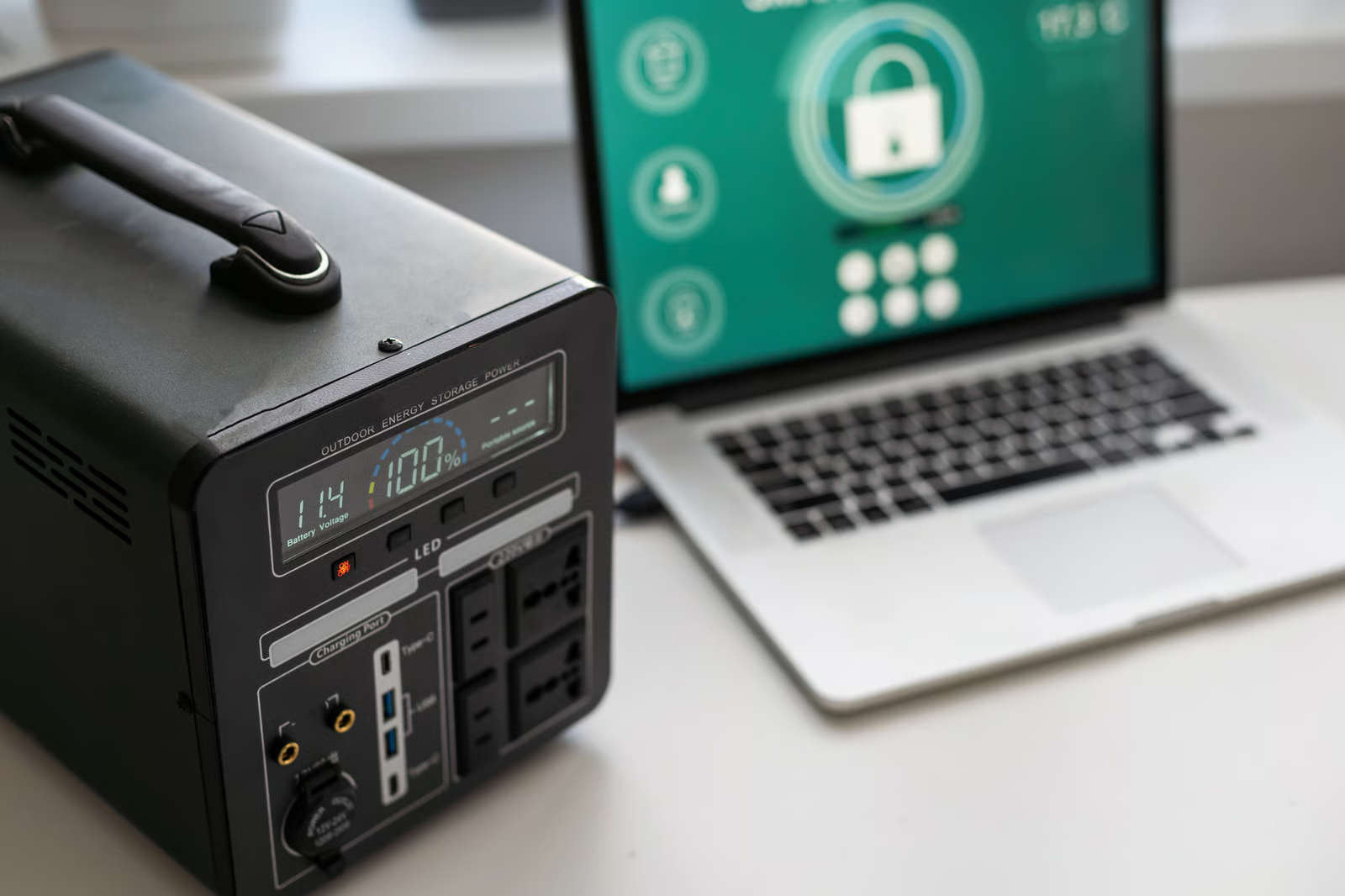
For shoppers comparing fuel generators with battery and solar options, this is also a useful benchmark. If your needs are mostly electronics, lighting, and short-duration low-watt appliances, a portable power station may be worth considering. If you need long runtime and higher surge handling for motor loads, a fuel-based generator often gives you more flexibility for the money.
A few trade-offs worth knowing
Bigger is not always better, but smaller is not always cheaper in the long run if it cannot do the job. A 2000 watt generator is easier to store, carry, and fuel, and inverter models are often quieter and better for sensitive electronics. That is a real advantage for RV users, campers, and homeowners who want a practical emergency solution.
The trade-off is headroom. You will need to manage loads carefully, especially during startup. If your outage plan includes a sump pump, fridge, freezer, and microwave all in the same window, moving up in size may save a lot of hassle.
If you are shopping for dependable backup power, the right question is not just what can a 2000 watt generator run. It is whether it can run what you need, at the same time, under real conditions. Get that answer right, and your generator becomes a solution instead of a compromise.