
You find out fast whether your van power setup is realistic the first time you park in shade, run your fridge all day, and wake up to a low battery. That is why portable solar power for van life needs to be sized around how you actually travel, not around a best-case sunny day or a product box claim.
For some van owners, a simple portable power station and one folding panel are enough. For others, that same setup turns into a daily power shortage once laptops, a fan, lights, and a 12V fridge are all in the mix. The right system depends on your loads, your travel pattern, and how much backup margin you want when weather does not cooperate.
Why portable solar power for van life appeals to so many travelers
The biggest draw is flexibility. Portable solar gives you a way to charge without running a gas generator, idling your vehicle, or booking sites just for shore power. It is quieter, lower maintenance, and easier to use than many people expect.
It also fits the way many people start van life. Not everyone wants to build a fully wired electrical system on day one. A portable power station paired with solar panels can cover the basics without committing to a full custom install. That matters if you are testing weekend travel first, renting out the van occasionally, or simply want a setup you can move between the van, campsite, tailgate, and home backup use.
The trade-off is capacity. Portable systems are convenient, but convenience does not replace battery size or charging speed. If you use a lot of power and stay parked for days, a small all-in-one unit can feel undersized quickly.
Start with your daily power use, not the panel wattage
A lot of buyers shop by solar panel size first. That is understandable, but it is usually backward. The better starting point is how many watt-hours you use in a day.
A phone and lights barely move the needle. A compressor fridge, laptop charging, roof fan, camera batteries, Starlink, or a small coffee maker can change the equation fast. Even modest van setups often use more energy than expected because the loads run across the whole day, not just in short bursts.
Think in three buckets. First, your always-on loads like a fridge or router. Second, your daily-use items like lights, fans, and device charging. Third, your occasional high-draw appliances like a blender, induction burner, or electric kettle. That last category is where many portable systems hit their limits, either on battery capacity or inverter output.
If your power station stores 1,000Wh, you do not have 1,000Wh of carefree usage in practice. Conversion losses, charging conditions, and battery protection all reduce what is truly available. A little cushion goes a long way, especially when a cloudy day wipes out part of your recharge plan.
What a practical van solar setup usually includes
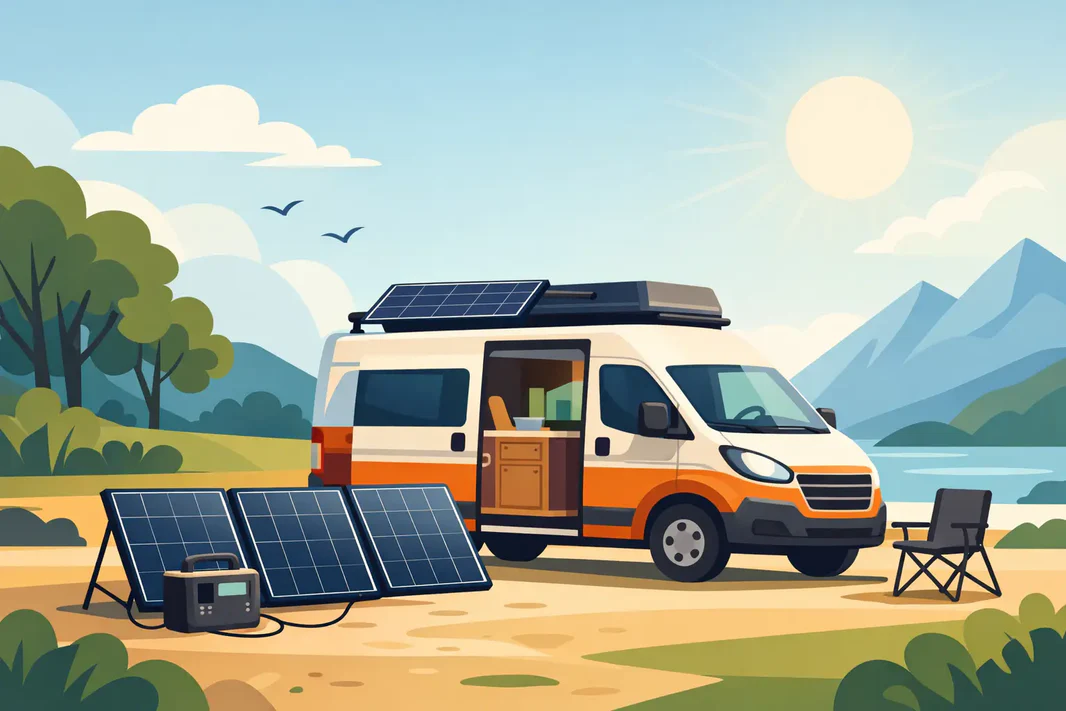
For most travelers, portable solar power for van life comes down to four pieces: a battery-based power station, portable or roof-mounted solar panels, the right charging cables and connectors, and a plan for backup charging from the vehicle alternator or shore power.
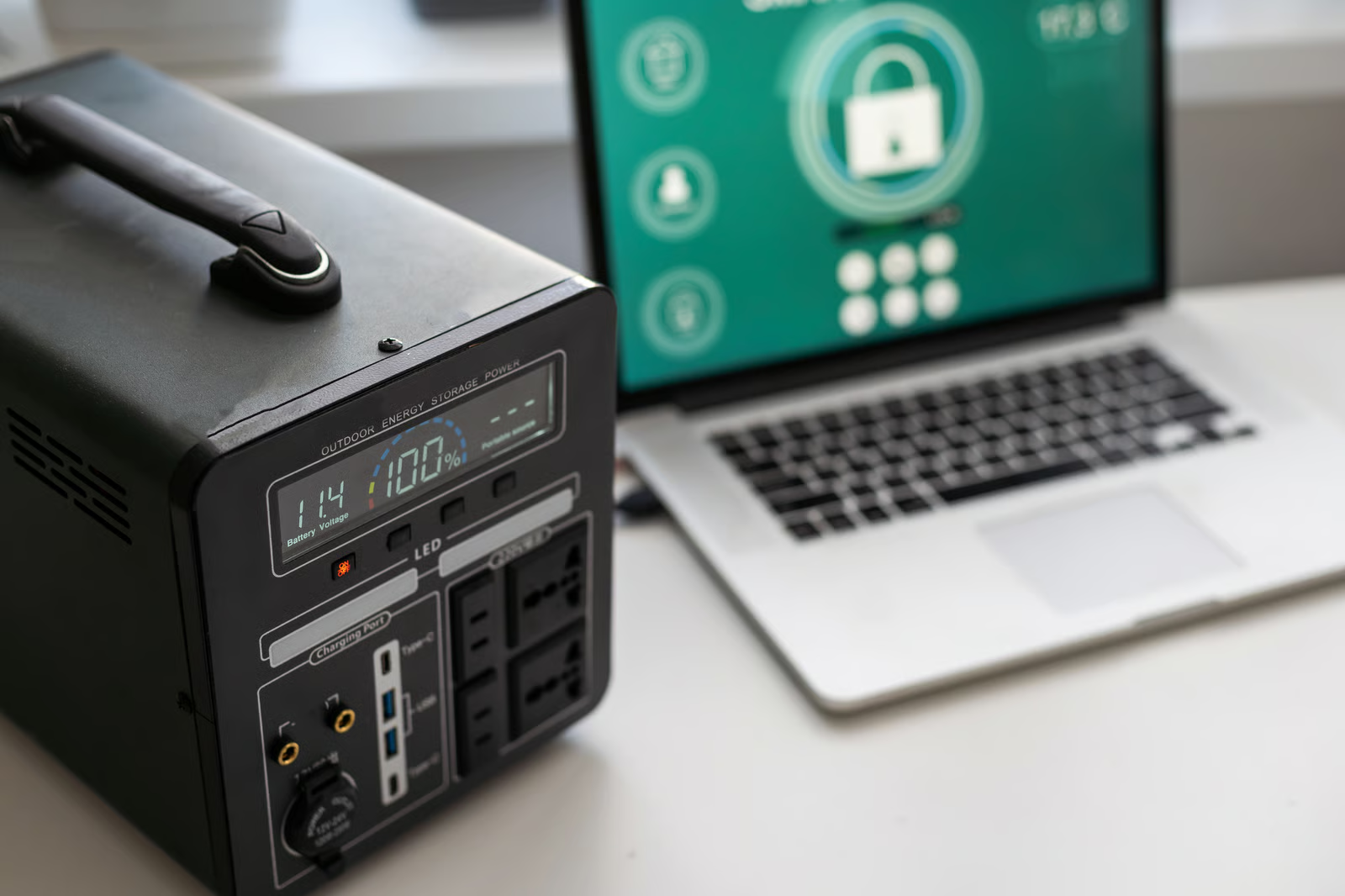
The power station is the center of the system. It stores energy, gives you AC and DC outputs, and manages solar input. Capacity matters, but so does output. A unit with enough storage can still be a bad fit if it cannot handle your appliance startup surge or if the solar input limit is too low to recharge effectively.
Portable solar panels are useful because you can park the van in shade and place the panels in sun. That is a real advantage in hot climates. Roof panels are more convenient because they charge while you drive and require less setup. Many van owners end up preferring a mixed approach: fixed panels for everyday charging and a folding panel for extra input when staying put.
Backup charging is where a lot of real-world reliability comes from. Solar is great, but not every stop has full sun. Alternator charging while driving can cover a surprising amount of daily use, especially if your travel style includes moving every day or two. Shore power remains the fastest reset when weather has been working against you.
How much battery capacity is enough for van life?
There is no single number that works for every van, but there is a practical pattern. If your needs are light, a smaller power station in the 300Wh to 700Wh range can handle phone charging, lights, a fan, and maybe a laptop. It is simple, portable, and budget-friendly.
If you are running a 12V fridge and relying on power every day, many people are better served by 1,000Wh to 2,000Wh or more. That range gives you room for cloudy weather, overnight use, and normal inefficiencies. It also means you are less likely to spend the whole trip monitoring battery percentage.
Once you want to use heating appliances, air conditioning, or a full remote-work setup with long laptop hours and connectivity gear, you are moving into a bigger system conversation. Portable can still work, but the budget and system size climb quickly. In those cases, being honest about what should stay propane-powered or be skipped entirely is often the smartest move.
Solar panel size matters, but sunlight matters more
On paper, bigger panel wattage sounds like the fix for everything. In practice, charging performance depends heavily on sun angle, season, temperature, shading, and how often you reposition the panels.
A 200W portable panel can perform well in strong summer sun. The same panel can be underwhelming in winter, in partial shade, or if it sits flat on the ground all day. That does not mean portable solar is unreliable. It means your expectations need to match the environment.
This is why oversizing your solar input often makes sense if the power station can accept it. Extra panel capacity gives you a better chance of recovering battery faster during limited sun windows. It also helps offset the reality that advertised panel output is usually a best-case number, not your daily average.
Common buying mistakes with portable solar power for van life
The first mistake is buying only for weekend conditions. A setup that works for one night at a campground may struggle during a three-day off-grid stop with bad weather.
The second is focusing only on watt-hours and ignoring inverter rating, solar input limit, battery chemistry, and recharge speed. A larger battery that takes too long to refill can be less useful than a smaller system with stronger charging options.
The third is assuming all van loads should be electric. That is not always the most practical route. For many travelers, keeping cooking or water heating on propane preserves battery capacity for the things that truly need electricity.
The fourth is underestimating cable and connector details. Portable panels, adapters, extension runs, and charging ports all need to match. Compatibility issues are fixable, but they are frustrating if you discover them on the road instead of before departure.
Portable power station or built-in van electrical system?
For many buyers, this is the real decision. A portable power station is faster to deploy, easier to understand, and simpler to remove or replace. It is a strong fit for part-time van users, first-time buyers, and anyone who wants one power product for multiple uses.
A built-in electrical system usually gives you more expansion, cleaner cable management, and better integration with alternator charging, DC loads, and roof solar. It can also make better sense if the van is a full-time platform.
Still, portable systems have become much more capable. If your goal is dependable power without a complicated install, they solve a very real problem. For a lot of van owners, that convenience is not a compromise. It is the point.
If you are comparing options, looking at portable power stations, solar-ready battery systems, and panel kits in one place can make the decision easier. That is where a retailer like GenVault can help narrow the field based on runtime, charging method, and travel use case instead of just headline specs.
What to prioritize when shopping
Look for a setup that matches your daily use with some reserve, accepts enough solar input to recharge at a practical speed, and gives you the output ports you will actually use. Battery chemistry matters too. LiFePO4 has become a popular choice for good reason because it offers long cycle life and better durability for frequent use.
Pay attention to how the system fits your routine. If you move often, strong car charging may matter more than adding another panel. If you camp in one place for days, solar collection and battery reserve become more important. If you work from the road, consistency matters more than chasing the lowest price.
The best portable solar power setup is not the one with the biggest numbers. It is the one that keeps your essentials running without turning every stop into a power management exercise. Buy for the way you travel now, but leave enough room so your setup still works when your trips get longer and your expectations get higher.