

When the power goes out, the question is rarely just “Will this run?” It is usually “How long will this keep running before I need more fuel, more battery, or a different setup?” That is where a generator runtime calculator guide becomes useful. It helps you turn wattage, fuel capacity, battery size, and actual usage habits into a realistic estimate instead of a guess.
For most buyers, runtime is the number that changes everything. A generator that powers your essentials for 6 hours may be fine for tailgating or a short outage. The same unit can feel undersized during a two-day storm. If you are comparing portable generators, inverter generators, solar generators, or battery backup systems, learning how to calculate runtime gives you a much better shot at buying the right equipment the first time.
What a generator runtime calculator guide should tell you
A good runtime calculation is not just a single number on a product page. It should help you answer three practical questions: how much power your devices need, how much energy your system can store or produce, and how quickly that energy gets used.
With fuel generators, runtime depends on the fuel tank size, the generator’s fuel consumption rate, and the load you place on it. With battery-based systems, runtime depends on battery capacity in watt-hours, inverter efficiency, and the total wattage of the devices you are powering. Solar charging can extend runtime, but only if panel size, sunlight conditions, and charging losses are part of the equation.
That is why advertised runtime and real runtime are often different. Manufacturers may list a runtime figure at 25 percent load, but many homeowners use generators at a much higher load during outages. The calculator matters because it brings the estimate closer to your actual use case.
Start with your real power load
Before you calculate runtime, you need a load estimate that is honest. That means listing the items you actually expect to run, not every appliance in the house.
For outage planning, many households focus on the refrigerator, freezer, a few lights, internet equipment, phone chargers, a microwave, and maybe a sump pump or space heater depending on conditions. For RV and camping use, it may be an air conditioner, coffee maker, lights, fans, and device charging. For jobsite or mobile work, it might be power tools, chargers, and small equipment.
The key is to separate running watts from starting watts. Some devices, especially anything with a motor, need a short burst of extra power when they start. A refrigerator may run at a modest wattage once operating, but its startup demand can be much higher. Runtime calculators focus mostly on running load, but your generator still needs enough surge capacity to start those items in the first place.
If your total running load is 1,500 watts, that is the number you use for a basic runtime estimate. If you cycle devices on and off, your average load may be lower. That is one of the biggest trade-offs in planning. Running everything at once is simpler to estimate, but managing loads can stretch runtime considerably.
How to calculate fuel generator runtime
For a gas, propane, or diesel generator, runtime comes down to how much fuel the unit burns at your expected load. The basic idea is straightforward:
Runtime = usable fuel capacity / fuel consumption per hour
If a generator has a 4-gallon gas tank and burns 0.5 gallons per hour at your expected load, runtime is about 8 hours. If the same unit burns 0.8 gallons per hour under heavier demand, runtime drops to 5 hours.
This is where load percentage matters. A generator operating at 25 percent load may run much longer than one operating at 75 percent load, even with the same tank size. That is why product listings often mention runtime at a specific load level. It is not misleading by itself, but it can be incomplete if you do not compare it to your own power needs.
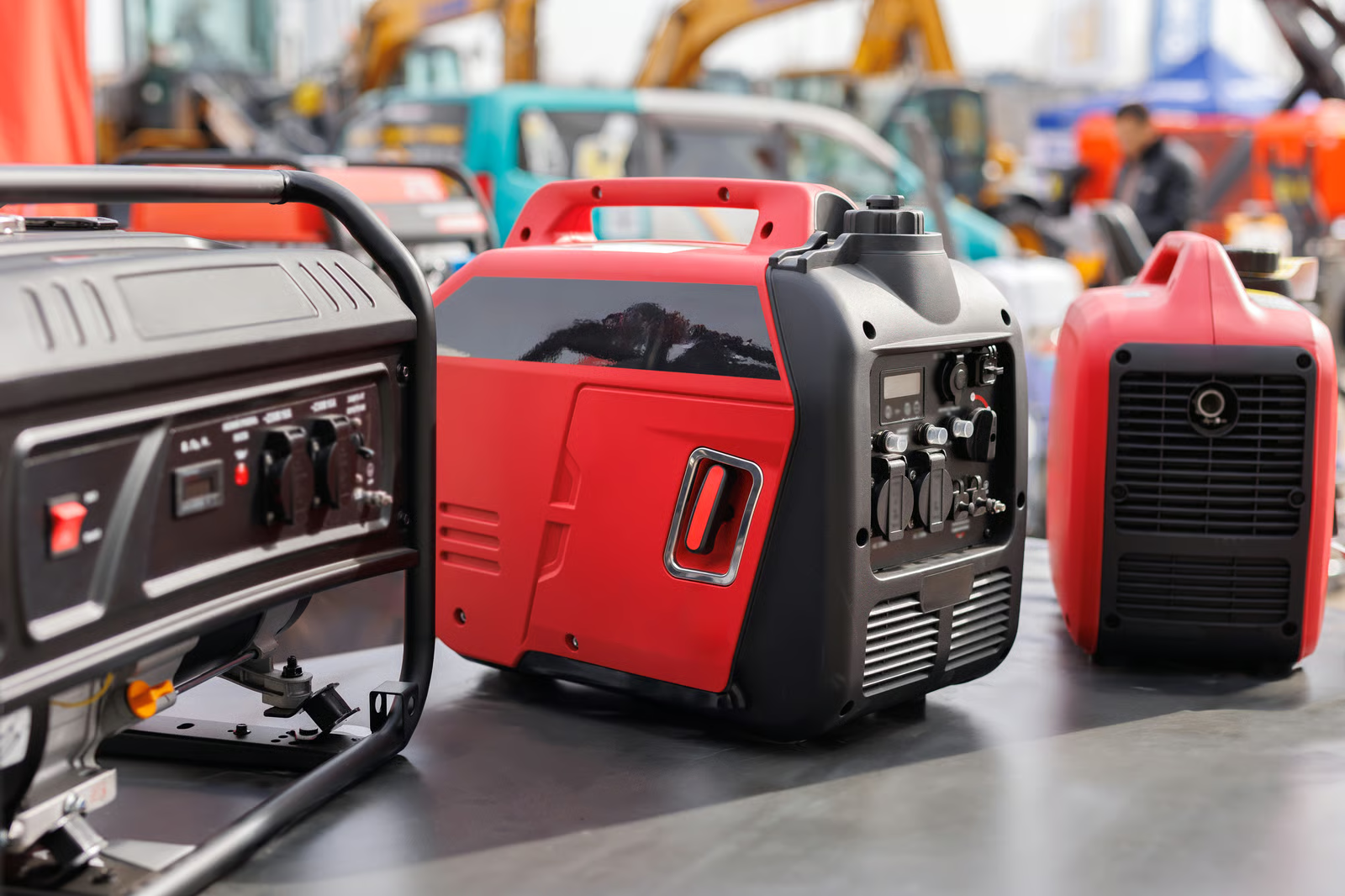
Portable inverter generators often do better on fuel efficiency at lighter loads because they can throttle down. Conventional portable generators may burn fuel less efficiently when demand is low. Standby generators have a different use case entirely, since they are built for automatic home backup and often sized for larger household loads.
Fuel type changes the math too. Propane tends to offer cleaner storage and easier long-term preparedness, but runtime and output can differ from gasoline on the same dual-fuel unit. Diesel can be efficient and durable, but it is not the right fit for every homeowner. The calculator should match the fuel you plan to use most often, not just the one listed first on the spec sheet.
How to calculate battery and solar generator runtime
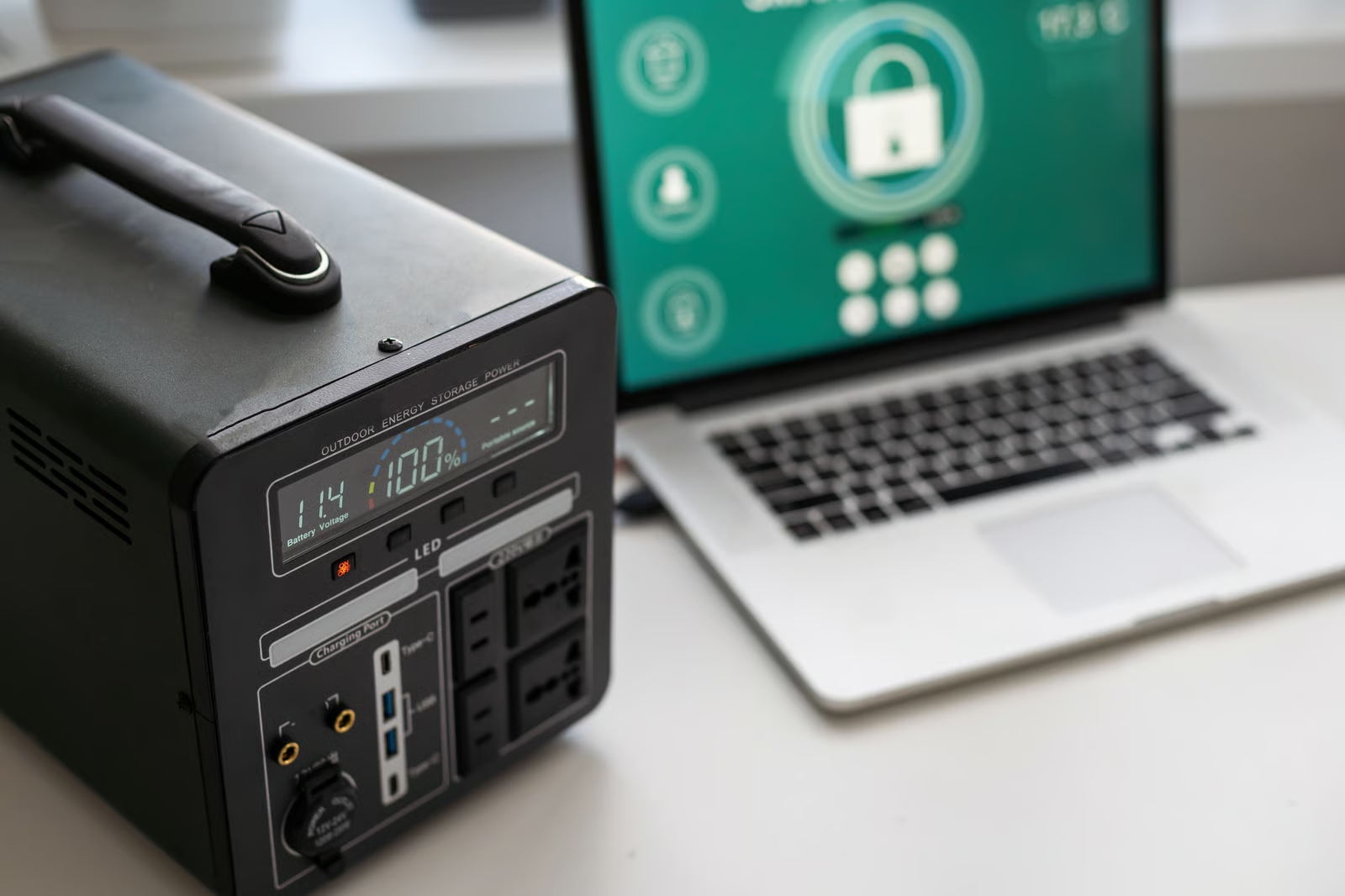
Battery-based runtime is easier to estimate in one sense because it starts with stored energy. The common formula is:
Runtime in hours = battery capacity in watt-hours x efficiency / device load in watts
If you have a 1,000Wh power station and your connected devices use 200 watts continuously, you might expect about 4 to 4.5 hours after accounting for inverter losses and system efficiency. If efficiency is around 85 percent, your usable energy is closer to 850Wh than the full advertised capacity.
This is the part many shoppers miss. A power station rated at 2,000Wh does not always deliver the full 2,000Wh to AC appliances. Some energy is lost in inversion, heat, and system management. DC-powered devices may be more efficient in some cases.
Load variation matters here too. A CPAP machine, laptop, and LED lights can run for a long time on a battery system. A space heater, hot plate, or full-size air conditioner can drain even a large unit much faster than expected. That does not mean the product is weak. It means heating and cooling loads are demanding.
Add solar charging, and runtime becomes more flexible. If your panels bring in 500Wh during a sunny stretch while your devices use 200 watts, you can extend usable time significantly. But solar input depends on weather, panel angle, season, and charge controller limits. A runtime calculator that assumes perfect sunlight all day is giving you a best-case scenario, not a planning number.
The most common runtime mistakes
One common mistake is using peak wattage instead of average use for everything. Another is ignoring startup surges entirely. A third is assuming every battery watt-hour is fully usable with no losses.
There is also the issue of duty cycle. Refrigerators, freezers, and sump pumps do not run nonstop. They cycle on and off. That can improve runtime compared with a simple full-load estimate. On the other hand, extreme heat, repeated door opening, or heavy water use can make those devices run longer than usual.
Fuel storage assumptions can trip people up as well. A generator may technically run for 10 hours on one tank, but if you only have one tank of fuel available during an extended outage, your practical runtime is still 10 hours. Planning backup fuel, safe storage, and refueling windows matters just as much as calculator math.
Using a generator runtime calculator guide when shopping
The best way to use runtime calculations is to compare systems based on your real priorities. If your goal is overnight backup for a refrigerator, modem, lights, and phone charging, your answer may be a smaller inverter generator or a mid-size power station. If your goal is full-day coverage for more household circuits, you may need a larger portable generator, a standby unit, or a battery system with expansion capacity.
This is also where budget and convenience come into play. Fuel generators often deliver more runtime per dollar for larger loads, but they require fuel handling, maintenance, and outdoor operation. Battery and solar-ready systems are quieter and easier to use, but extended runtime for heavy loads usually means higher upfront cost.
For many buyers, the right answer is not choosing one technology over another forever. It is choosing the setup that fits the job. A homeowner may want a fuel generator for storm outages and a smaller power station for indoor essentials. An RV owner may care more about quiet runtime than maximum output. A preparedness buyer may want fuel flexibility plus solar charging options.
If you are comparing options at https://www.generatorvault.com, runtime becomes a much more useful filter once you know your load, your expected hours of use, and how much hands-on management you are comfortable with.
A simple way to pressure-test your numbers
After you run the calculator, add margin. If you think you need 1,800 watts, plan closer to 2,200. If the estimate says 8 hours, ask what happens if weather, startup surges, or heavier use cut that to 6. Buying too close to the line is where frustration starts.
A practical runtime estimate should leave room for reality. Storms last longer than expected. Fuel stops are not always convenient. Solar conditions change. Families plug in one more device. The more honest your inputs are, the more useful the result becomes.
The best generator runtime plan is not the one with the prettiest spec sheet. It is the one that still works when the outage drags on, the weather turns, and you need power without second-guessing every decision.