
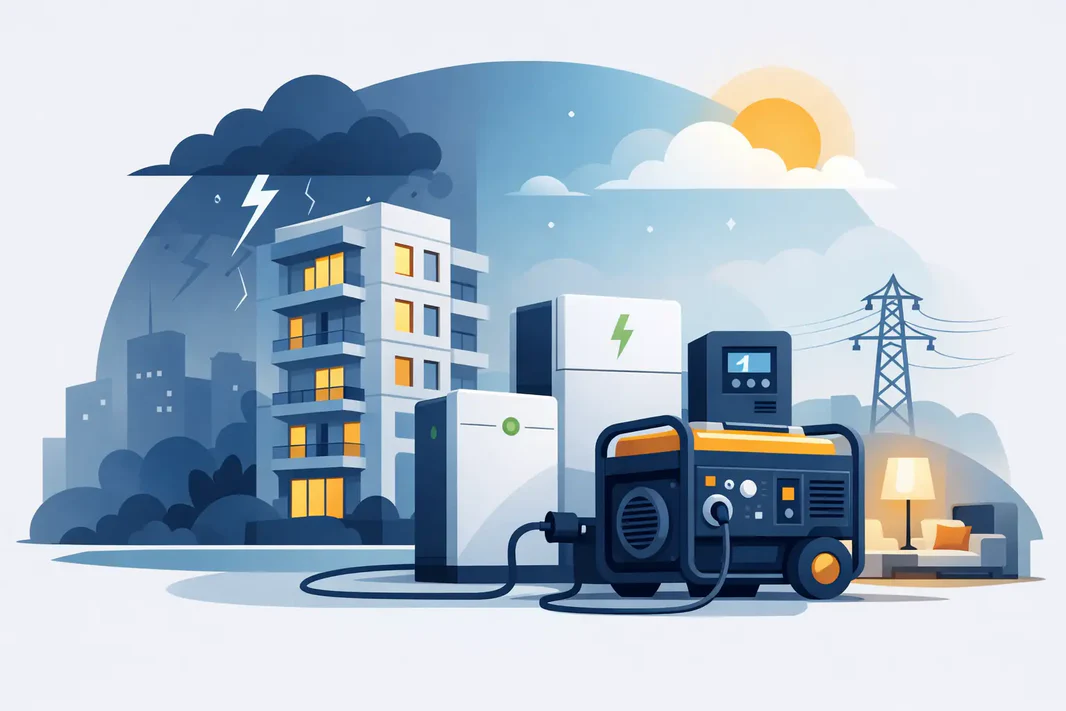
A power outage in an apartment feels different than one in a house. You are not just dealing with darkness and a dead Wi-Fi router. You are dealing with elevator concerns, building rules, limited storage, shared walls, and the fact that one bad equipment choice can create a safety problem fast. That is why choosing an emergency power supply for apartment living takes more than picking the biggest backup unit you can afford.
The right setup depends on what you actually need to keep running, how long outages usually last in your area, and what your building allows. For most apartment residents, the best answer is not a traditional generator. It is usually a battery-based power station, sometimes paired with solar charging if you have usable outdoor space.
What works best as an emergency power supply for apartment use?
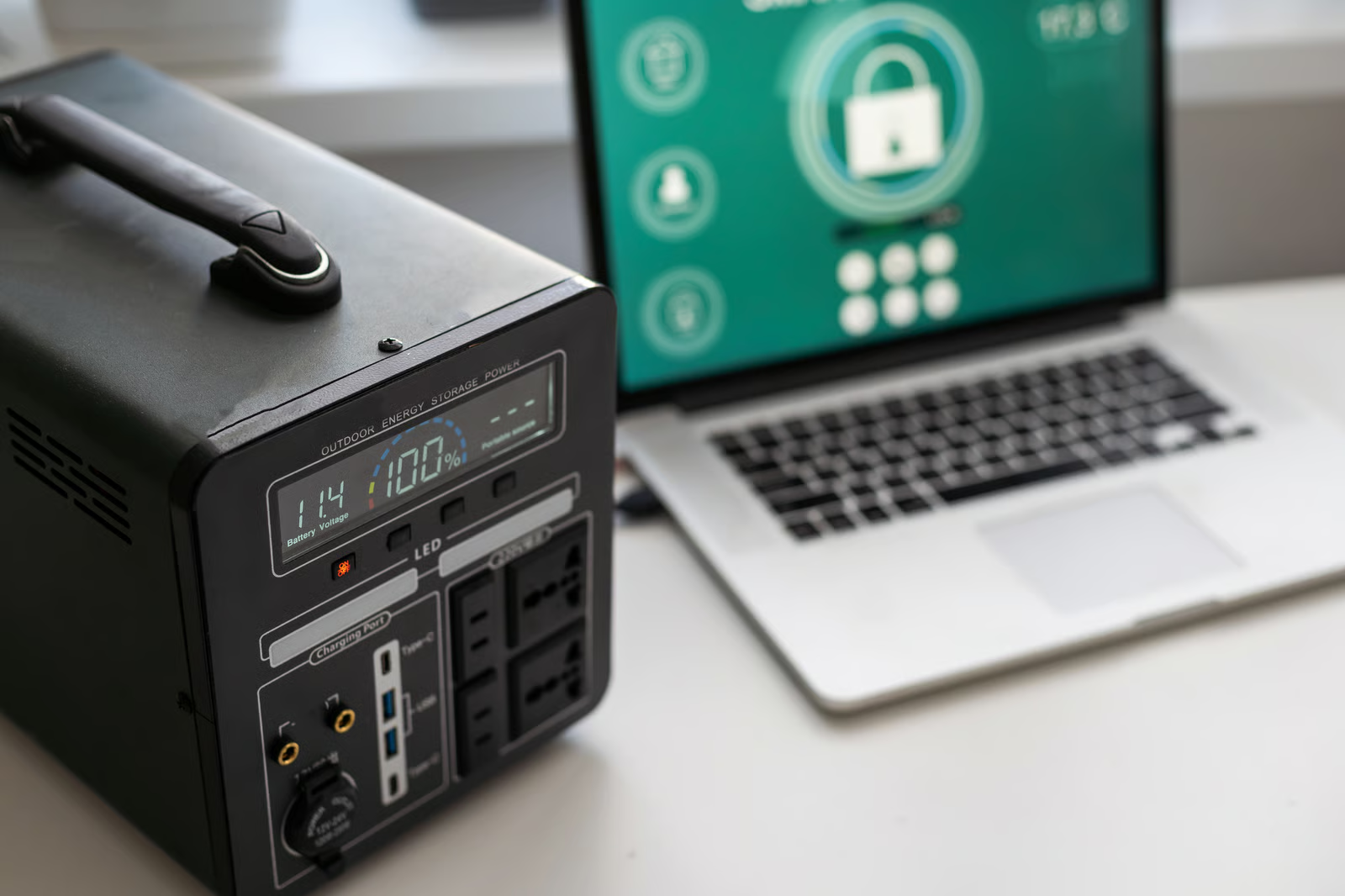
For most renters and condo owners, a portable power station is the cleanest fit. It runs without gasoline, does not produce exhaust, and can be charged from a wall outlet before an outage starts. Many models are compact enough to store in a closet, yet powerful enough to keep essentials running for hours.
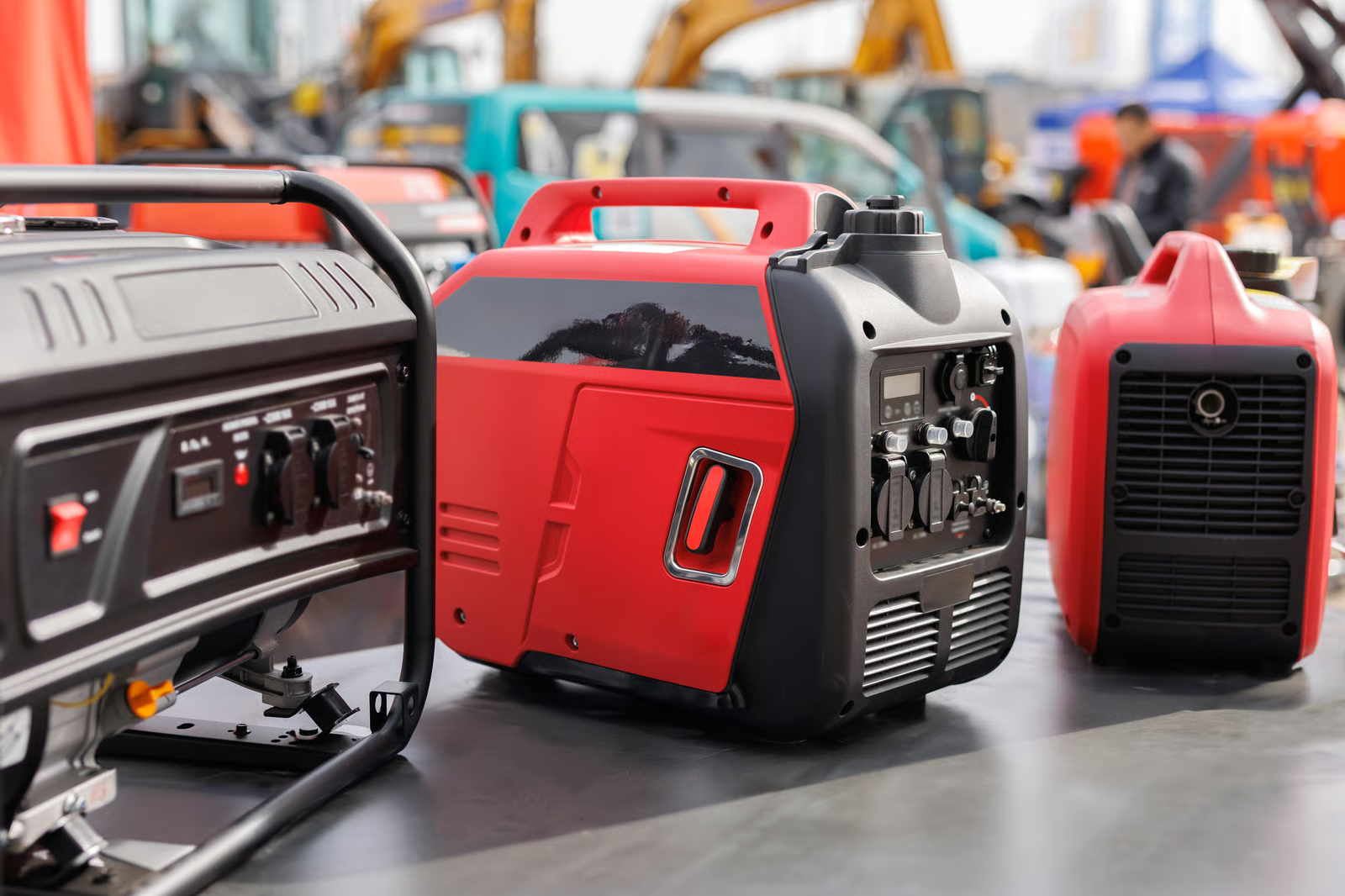
That matters in an apartment because indoor safety is non-negotiable. Fuel generators should never be used inside an apartment, on an enclosed balcony, in a hallway, or near doors and windows. Even if a portable gas generator looks like the cheaper way to get more wattage, carbon monoxide risk makes it the wrong choice for nearly all apartment situations.
Battery backup systems solve that problem. They are quieter, easier to store, and much more realistic for urban living. The trade-off is runtime. A battery station will not run your whole apartment the way a permanently installed standby generator can run an entire house. But it can keep the most important things powered, and that is usually the goal.
Start with the loads that matter most
People often shop by battery size first, then realize later that they chose for the wrong use case. A better approach is to list what you need during an outage and separate true essentials from comfort items.
For most apartment outages, essentials usually include a phone charger, a few LED lights, a modem and router, a laptop, a CPAP machine if needed, and maybe a small fan. In colder climates, some residents also want enough backup power for an electric blanket or to recharge medical devices. If you work from home, internet uptime may matter as much as lighting.
A refrigerator is where things get more complicated. Some larger portable power stations can run a modern fridge for a limited time, but startup surge and runtime expectations matter. If your apartment fridge is your top priority, you need to check both running watts and surge watts, not just battery capacity.
Space heaters, electric stoves, window AC units, and dryers are usually poor candidates for battery backup. They draw too much power and drain batteries quickly. If your plan depends on high-wattage heating or cooling, the equipment gets larger, heavier, and more expensive fast.
Battery capacity and output are not the same thing
This is where many buyers get tripped up. Capacity, often shown in watt-hours, tells you how much energy the unit stores. Output, shown in watts, tells you how much it can deliver at one time.
If you need to run a 60W router and a few small devices, almost any decent power station can handle the output. If you want to start a refrigerator or power a microwave, output becomes the deciding factor. A unit may have enough stored energy for several hours but still fail to run the appliance if the inverter cannot handle the load.
As a rough example, a 500Wh station might keep phones, lights, and networking gear going through a short outage. A 1,000Wh to 2,000Wh model opens up more practical apartment backup options, including some refrigeration and medical-device support. Above that, you get better runtime and more appliance flexibility, but you also get more weight and a higher price tag.
That balance matters in a third-floor walk-up or a small one-bedroom where every square foot counts.
Solar can help, but apartment reality matters
A solar-ready power station sounds ideal, and sometimes it is. If you have a private patio, open balcony, or regular access to direct sunlight, portable solar panels can extend runtime during a prolonged outage. That can be a major advantage when the grid is down for more than a day.
But apartment solar is not always simple. Balcony orientation, shading from nearby buildings, HOA rules, and the lack of secure outdoor placement can all reduce real-world performance. A solar panel that looks good on paper may produce much less than expected if you only get partial sun for a few hours.
That does not make solar a bad option. It just means you should treat it as a recharge method, not a guarantee. For many apartment residents, the best plan is a battery power station first, with solar added only if the space and sunlight are there.
When a UPS makes sense and when it does not
If your main concern is keeping your internet and computer alive long enough to avoid interruption, an uninterruptible power supply can help. A UPS is great for short-duration backup and instant switchover. It can prevent your modem from dropping and protect electronics from sudden shutdowns.
What it cannot do well is act as a broad emergency power supply for apartment backup. Most UPS units are built for minutes, not many hours. They are useful for a workstation or network corner, but not as the main outage strategy for your apartment.
In many cases, buyers end up using both. A UPS handles immediate continuity for networking or work equipment, while a larger portable power station covers the rest.
Apartment-safe backup power comes down to more than fuel type
Battery-powered systems are generally the safest choice, but safe use still matters. You want enough ventilation for the unit, proper charging habits, and realistic expectations about extension cords and appliance connections. Overloading a backup system is one of the easiest mistakes to make during an outage.
You also need to think about storage. Some larger power stations are technically portable but not convenient to move often. If you need to lift it out of a closet, carry it downstairs, or reposition it around a tight apartment, form factor matters almost as much as specs.
Noise is another overlooked issue. Even battery systems have cooling fans, and some run louder than others under load. In an apartment, where a unit may sit near your living area or bedroom, quieter operation can be worth paying for.
How to choose the right size without overbuying
The smartest apartment backup setup is usually built around a realistic outage plan, not a worst-case fantasy. If outages in your area are usually two to six hours, you may not need a huge system. If storms regularly knock power out for a day or more, a larger battery and optional solar charging starts to make more sense.
It helps to think in three tiers. A small setup covers communications, lighting, and device charging. A mid-size setup adds longer runtime and support for more demanding essentials like a CPAP or small kitchen loads. A large setup can support select major appliances, but at that point you should be honest about whether your apartment can actually accommodate the size, weight, and cost.
That is why many buyers land in the middle. They want enough power to stay connected, preserve food for a while, and get through the outage without turning the apartment into a gear storage room.
Shopping tips for an emergency power supply for apartment buyers
Look closely at battery chemistry, inverter rating, recharge time, outlet variety, and weight. Lithium iron phosphate batteries are especially appealing for apartment use because they generally offer long cycle life and good thermal stability. Fast wall charging is also useful, since a unit that takes all day to recharge may be less practical between outages.
Pay attention to the outlets you will actually use. If your backup plan revolves around USB devices, AC wall plugs, and a 12V car socket, make sure the unit supports them without adapters. App control can be convenient, but it should not be the reason you buy. Reliable output and straightforward operation matter more during an actual outage.
If you are comparing options, start with your essential devices, add up realistic wattage, and give yourself headroom. Then compare battery stations, solar-ready systems, and related backup products in one place so you are not piecing together a plan from mismatched equipment. That is where a focused retailer like GenVault can help, especially if you want to compare portable power stations, solar panels, battery backup options, and accessories without bouncing between categories.
A good apartment backup plan is not about powering everything. It is about keeping the right things running safely, quietly, and long enough to make an outage manageable. If you choose with your building, your load needs, and your storage limits in mind, you will end up with a system you can actually use when the lights go out.