
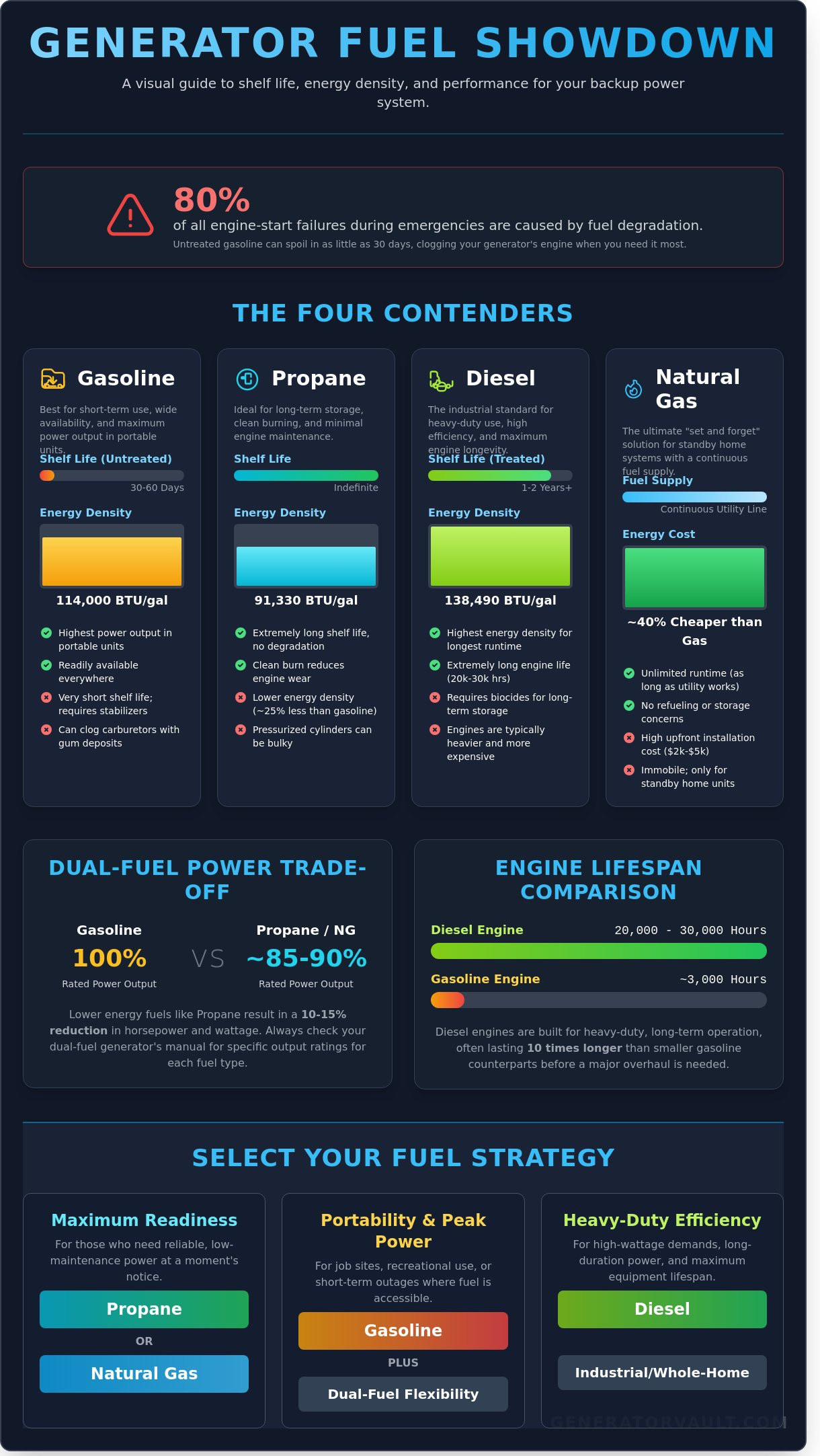
Your generator isn’t a machine that runs on hope; it’s a system that depends entirely on the chemical stability of your generator fuel. Most homeowners assume a full tank in October will still provide 10 kilowatts of power during a February ice storm, but untreated gasoline can begin to degrade in as little as 30 days. You likely understand that a backup system is only as reliable as its weakest link. It’s frustrating to maintain a piece of equipment for years only to have it fail when the grid goes down, especially since fuel degradation accounts for roughly 80% of all engine-start failures during emergencies.
This guide will help you master the technical and practical differences between gasoline, propane, diesel, and natural gas to ensure your system is ready for any crisis. You’ll gain a clear strategy for fuel rotation and storage that keeps your engine running efficiently. We’ll examine specific shelf life data for different storage environments and provide a bottom-line comparison of dual-fuel versus single-fuel benefits for long-term reliability. By the end, you’ll have the confidence to choose a setup that matches your specific lifestyle and power requirements.
Key Takeaways
- Compare the trade-offs between gasoline’s accessibility and propane’s decade-long shelf life to determine the best fit for your storage capabilities.
- Analyze energy density to understand how your choice of generator fuel directly impacts efficiency and total runtime under various load capacities.
- Explore the strategic advantages of dual-fuel and tri-fuel units for maintaining power when primary fuel supply chains are interrupted.
- Learn to mitigate technical risks like fuel oxidation and phase separation to ensure your engine remains operational during a critical crisis.
- Apply our expert “Bottom Line” approach to select a fuel strategy tailored to your specific application, from remote job sites to emergency home backup.
Understanding the Primary Generator Fuel Types
Selecting the right generator fuel is the first step in building a reliable emergency power strategy. For anyone preparing for severe weather events or unexpected power outages, the choice of fuel dictates how long you can stay powered and how much maintenance your system requires. Each fuel source has distinct physical properties that affect storage safety and engine performance. Understanding these variables ensures your equipment remains operational when the grid fails.
Gasoline and Propane: The Residential Standards
Gasoline remains the most common choice for portable units because you can find it at any local service station. It delivers approximately 114,000 BTUs per gallon, giving it a higher energy density than propane. This means a gasoline engine often produces more peak wattage than a propane-converted equivalent. The main drawback is its short shelf life. Untreated gasoline begins to degrade within 30 to 60 days, leading to gum deposits in the carburetor that can prevent the engine from starting during a crisis.
- Gasoline: Best for short-term portability and high energy output per gallon.
- Propane (LPG): Best for long-term storage and minimal engine maintenance.
- Fuel Stability: Gasoline requires stabilizers; Propane has an indefinite shelf life.
Propane offers a cleaner burn and an indefinite shelf life. Since the fuel is stored in pressurized cylinders, it doesn’t degrade or clog fuel lines. However, propane contains only 91,333 BTUs per gallon. You’ll need about 25 percent more propane by volume to produce the same amount of electricity as gasoline. For homeowners who don’t want to rotate fuel supplies every few months, propane is the superior choice for standby readiness.
Diesel and Natural Gas: High-Performance Solutions
Diesel engines are designed for heavy-duty cycles and long-term efficiency. A typical diesel-powered Engine-generator can operate for 20,000 to 30,000 hours before requiring a major overhaul. In contrast, many smaller gasoline engines reach their end of life after 3,000 hours. Diesel is less flammable than gasoline, making it safer for bulk storage, though it requires biocides to prevent fungal growth in the tank over time. This makes it the industrial standard for homes with high-wattage demands.
Natural gas provides a permanent solution for standby systems. It’s delivered via underground utility lines, which means you don’t have to worry about refueling during a multi-day outage. While the initial installation of a natural gas line and a transfer switch can cost between $2,000 and $5,000, the fuel is often 40 percent cheaper than gasoline per unit of energy. It’s the most reliable generator fuel for residents who want automated protection without manual intervention. You should weigh these upfront costs against the long-term benefit of a continuous fuel supply that won’t run dry when local gas stations are closed or out of power.
Comparing Fuel Performance: Runtime, Efficiency, and Cost
Selecting the right generator fuel isn’t just about price; it’s about how much work that fuel can perform when the grid goes down. Your choice determines how often you need to refuel and how much power you can actually pull from the engine. For Jacksonville residents preparing for hurricane season, understanding the technical differences between diesel, gasoline, and propane is the first step in building a reliable backup strategy.
Energy Density and BTU Ratings
Energy density is measured in British Thermal Units (BTUs). One BTU represents the amount of heat required to raise the temperature of one pound of water by one degree Fahrenheit. A higher BTU rating means more energy is packed into every gallon, leading to longer runtimes. According to the Fuel Properties Comparison from the DOE, diesel is the clear leader with approximately 138,490 BTUs per gallon. Gasoline provides about 114,000 BTUs, while propane delivers only 91,330 BTUs per gallon.
This density gap has practical consequences for your hardware. Because propane and natural gas have lower energy content, engines running on these fuels typically see a 10% to 15% reduction in rated horsepower compared to gasoline. If you’re running a dual-fuel unit, you must check the manual for the specific wattage drop-off when switching away from gasoline.
Operational Efficiency Under Load
Generator efficiency fluctuates based on the electrical demand, or load, placed on the system. Diesel engines excel at sustained, high-wattage output. They often maintain 35% thermal efficiency even when pushed to 100% capacity. In contrast, small gasoline engines are least efficient at low loads. A standard 5,000-watt gasoline unit might consume 0.4 gallons per hour at 25% load, but that consumption can double to 0.8 gallons when you hit 75% load.
To plan your fuel reserves, use this simple formula: Total Tank Capacity / Consumption Rate at Expected Load = Total Runtime. For example, if your 20-gallon tank consumes 0.5 gallons per hour at half-load, you have 40 hours of potential power. When you organize your fuel storage effectively, you can maintain these reserves without the risk of degradation.
- Diesel: Best for 24/7 operation and heavy appliances like central AC.
- Gasoline: Best for short-term use and portable needs, though it requires stabilizers for long-term storage.
- Propane: Best for shelf-life and reliability in cold starts, despite lower energy density.
The “cold start” factor is also a consideration. While Jacksonville rarely sees sub-zero temperatures, even a 40°F morning can affect engine ignition. Gasoline remains highly volatile and easy to spark in these conditions. Diesel can occasionally experience gelling at 15°F, but this is a negligible risk for Florida residents. Propane stays in a pressurized liquid state until -44°F, making it the most reliable choice for immediate starts in any weather condition. Calculating your real cost per kilowatt-hour (kWh) requires looking at the price per gallon divided by the total kWh produced. While diesel has a higher upfront cost, its superior efficiency often results in a lower cost per hour of operation during extended outages.
The Rise of Dual-Fuel and Tri-Fuel Flexibility
Modern generator fuel management has evolved beyond the single-fuel canisters of the past. Dual-fuel technology allows a single engine to consume either gasoline or liquid propane. Tri-fuel systems go a step further by adding a dedicated natural gas inlet for maximum versatility. This flexibility is vital for Jacksonville residents who need to pivot when supply chains break during storm season. Factory-engineered units are the gold standard for this application. While aftermarket conversion kits exist for around $150 to $300, they often lack the integrated safety sensors found in factory models. Choosing a factory-built unit ensures the engine timing and compression ratios are optimized for all supported fuels right out of the box.
- Dual-Fuel: Engines equipped with a fuel selector switch to toggle between gasoline and a pressurized propane tank.
- Tri-Fuel: Systems that include a large-diameter quick-connect port for natural gas lines, offering a three-way path to power.
- Factory vs. Aftermarket: Factory units maintain manufacturer warranties and EPA compliance, whereas kits may lead to lean-run conditions if not calibrated perfectly.
The Strategic Advantage of Redundancy
Redundancy is the core of any survival plan. During the 2017 hurricane season, gasoline shortages lasted for over a week in parts of Florida. A homeowner with three 20-pound propane tanks on-site remained powered while others waited in 4-hour lines at the pump. Tri-fuel units are particularly effective for homes with municipal gas connections. You get the portability of a gas unit with the nearly infinite supply of a stationary standby system. Most modern units feature a simple selector dial. You can transition from one source to another without the engine stalling, provided you follow the manufacturer’s load-shedding protocols. This NREL comparison of generator fuel choices shows how fuel diversity increases system reliability during prolonged grid failures.
Technical Considerations for Multi-Fuel Engines
Multi-fuel carburetors use specialized venturi tubes to handle different gas densities automatically. Propane and natural gas burn significantly cleaner than gasoline. This means spark plugs last longer and oil stays clear of carbon contamination for 25% to 40% more run hours. Propane is also a “dry” fuel, so it doesn’t leave gummy deposits in the carburetor like 10% ethanol-blended gasoline does after 30 days of storage. Propane typically produces about 10% to 12% less power than gasoline due to its lower energy density, a phenomenon known as BTU derating. Users must calculate their peak wattage needs based on the lowest-performing generator fuel to avoid overloading the circuit during a switch.
Fuel Storage Logistics and Long-Term Maintenance
Storing generator fuel requires more than a simple plastic jug in the corner of a garage. Gasoline is a volatile organic compound that begins to oxidize within 30 days of purchase. This chemical reaction creates gummy deposits and varnish that can ruin a carburetor or fuel injector in a single season. While gasoline has a functional shelf life of 3 to 6 months, propane remains stable for 10 years or longer because it is stored in pressurized, airtight cylinders. By 2026, the prevalence of ethanol in standard pump gas makes the use of advanced fuel stabilizers mandatory for any resident looking to maintain emergency readiness.
Preventing Gasoline and Diesel Degradation
Modern E10 gasoline contains 10% ethanol, which is hygroscopic. It actively pulls moisture from Jacksonville’s humid air. When water saturation reaches a threshold of 0.5%, phase separation occurs. The ethanol and water bond together and sink to the bottom of the tank, leaving the gasoline above it octane-deficient and the bottom layer highly corrosive. Diesel fuel faces a different challenge. Microbial growth, commonly called “algae,” thrives at the fuel-water interface in diesel tanks. You must treat diesel with a concentrated biocide every 6 months to prevent filter clogging. A disciplined rotation schedule is the only way to ensure reliability. Use a first-in, first-out (FIFO) system:
- Label every fuel container with the exact purchase date using a permanent marker.
- Rotate your stock by pouring 90-day-old fuel into your daily vehicle.
- Refill the container immediately with fresh fuel and a high-quality stabilizer.
Safe Storage Practices and Regulations
Hardware choice determines your safety margin. You should utilize UL-listed safety cans rather than cheap plastic alternatives. Type I safety cans feature a single opening for filling and pouring. Type II safety cans are superior for generator fuel management because they include a flexible metal hose and a dedicated vacuum-release vent for controlled, spill-free pouring. NFPA 30 codes generally limit residential storage of Class I flammable liquids to 25 gallons inside a dwelling. For larger quantities, use a detached shed located at least 10 feet from your home. This structure must be well-ventilated to prevent the accumulation of heavy vapors. Keep storage temperatures below 80°F whenever possible. Excessive heat increases the rate of evaporation and internal pressure within the cans, which can lead to seal failure or dangerous venting.
Selecting the Right Fuel Strategy for Your Power Needs
Choosing a power source isn’t just about buying a machine; it’s about managing the energy that drives it. Your choice of generator fuel dictates your maintenance schedule, your storage requirements, and your operational costs over a 10-year lifecycle. At Generator Vault, we recommend a “Bottom Line” strategy that prioritizes reliability over initial sticker price. While a gasoline portable unit might cost $800 upfront, the logistical burden of rotating fuel every six months and the 25% higher consumption rate compared to diesel or propane often makes it the more expensive choice over time.
Scenario-Based Recommendations
Effective power management requires matching the machine to the environment. For recreational use, such as camping or tailgating, portable gasoline or propane inverters are the standard. These units provide clean power with less than 3% total harmonic distortion, protecting sensitive electronics. For critical home backup in Jacksonville, natural gas or large-scale propane tanks offer the highest reliability. A high-capacity home standby generator system remains a top choice here, as it eliminates the need for manual refueling during extended outages. On remote job sites, trailer-mounted diesel units are the logical choice due to their high torque and lower fire risk on-site.
Future-Proofing Your Power Supply
The energy sector is shifting toward cleaner alternatives. By 2026, we expect a 15% increase in the availability of renewable diesel and synthetic fuels, which offer better shelf stability than traditional petroleum. Forward-thinking homeowners are also integrating solar generators as a zero-fuel secondary backup. These systems handle small loads like phones and LED lighting, preserving your primary generator fuel for heavy appliances like air conditioners or well pumps. This hybrid approach ensures you aren’t reliant on a single supply chain during a regional crisis.
Financial analysis shows that hardware is only 40% of the total cost of ownership. The remaining 60% is tied to fuel procurement, storage stability, and engine maintenance. Diesel engines, while costing 30% more initially, often last twice as long as gasoline counterparts and offer 500-hour service intervals. Weigh these data points carefully before making a final investment.
Final Selection Checklist
- Calculate Peak Load: Ensure the unit handles the 20% surge wattage required by motor-driven appliances.
- Verify Fuel Access: Confirm you have a 72-hour supply of fuel on hand or a dedicated utility line.
- Assess Storage Space: Gasoline requires ventilated, fire-rated cabinets; propane requires outdoor clearance.
- Review Maintenance Capability: Choose a fuel type you’re comfortable managing, whether that’s adding stabilizers to gas or monitoring diesel exhaust fluid.
- Consult the Experts: Visit Generator Vault to compare real-world runtime data across different fuel platforms.
Securing Your Energy Independence
Selecting the right generator fuel is a strategic decision that dictates your long-term operational readiness. Gasoline remains a standard for accessibility, though its 6 to 12 month shelf life requires chemical stabilization to prevent engine gumming. Propane offers a cleaner burn and indefinite storage capability, which is ideal for 24-hour backup scenarios where fuel rotation is difficult. If you require maximum versatility, dual-fuel systems provide the redundancy needed during extended outages when one supply chain might fail. Integrating these technical factors ensures your hardware performs exactly when the grid does not.
As an authorized retailer for industry leaders like Kohler and Briggs & Stratton, we provide the hardware and the data-driven insights you need to make an informed choice. Our team offers expert technical support for every purchase to ensure your system is configured correctly from day one. We also provide free shipping across the contiguous United States to simplify your procurement process. You’re now equipped to build a power strategy that prioritizes efficiency and resilience. Browse our selection of Kohler and Briggs & Stratton generators today and take the final step toward total energy self-reliance.
Frequently Asked Questions
How long can I store gasoline before it goes bad?
Untreated gasoline typically degrades in 3 to 6 months due to oxidation and the evaporation of volatile compounds. If you add a high-quality stabilizer, you can extend this shelf life to 12 or 24 months depending on the specific product brand. Jacksonville’s high humidity often accelerates moisture absorption in ethanol-blended fuels, so checking for phase separation every 90 days is a critical maintenance step for your generator fuel.
Does a generator produce less power when running on propane?
Yes, you’ll generally see a 10% reduction in power output when switching from gasoline to propane. Propane contains approximately 91,333 BTUs per gallon, while gasoline provides about 114,000 BTUs. This energy density gap means a dual-fuel 10,000-watt generator might only produce 9,000 running watts on propane. You should check the manufacturer’s spec sheet for the exact derating factor before relying on it for heavy startup loads.
Is it better to leave a generator fuel tank full or empty during storage?
You should store your generator with a full tank of stabilized fuel to prevent internal corrosion and gasket drying. A full tank minimizes the surface area of the metal exposed to oxygen and moisture, which reduces the risk of rust formation. If you plan to store the unit for more than 12 months, draining the carburetor bowl is still necessary to prevent varnish from clogging the small internal jets.
Can I use high-octane premium gas in my portable generator?
You can use premium gas, but it offers zero performance benefits for standard small engines designed for 87-octane fuel. Most portable generators have compression ratios around 8.5:1, which don’t require the high detonation resistance of 91 or 93 octane. Instead of spending 20% more on high-octane fuel, invest in ethanol-free 87-octane gas to prevent the rubber degradation often caused by 10% ethanol blends in Florida’s heat.
What is the best fuel stabilizer to use for long-term storage?
STA-BIL Storage and Sea Foam Motor Treatment are the two most reliable options for protecting generator fuel during the off-season. STA-BIL’s formula is specifically engineered to keep fuel fresh for up to 24 months by preventing oxidative breakdown. In a 5-gallon container, 1 ounce of stabilizer is usually sufficient. This small investment prevents the $150 repair bill typically associated with professional carburetor cleaning after a storm season.
Is natural gas or propane better for a whole-house standby generator?
Propane is better for raw power and reliability in remote areas, while natural gas offers the convenience of an infinite fuel supply. Propane has a higher energy density, providing about 2,500 BTUs per cubic foot compared to 1,050 BTUs for natural gas. However, 85% of urban homeowners prefer natural gas because it eliminates the need for 500-gallon storage tanks and scheduled deliveries during hurricane season.
Can I convert my existing gasoline generator to run on propane?
You can convert most gasoline models using a tri-fuel or dual-fuel conversion kit from manufacturers like US Carburetion. These kits replace or modify the stock carburetor to allow propane or natural gas intake through a dedicated regulator. The installation usually takes 60 to 90 minutes for a skilled DIYer. Keep in mind that aftermarket conversions might void the original 2-year or 3-year manufacturer warranty on the engine and its fuel system components.
How much fuel does a 10kW generator use per hour?
A 10kW generator typically consumes 0.75 to 1.1 gallons of gasoline per hour at a 50% load. If you increase the demand to a 100% load, consumption often jumps to 1.5 or 1.8 gallons per hour. For Jacksonville residents planning for a 3-day outage, this means maintaining a minimum stock of 55 to 60 gallons of fuel to ensure continuous operation for essential cooling and refrigeration.