
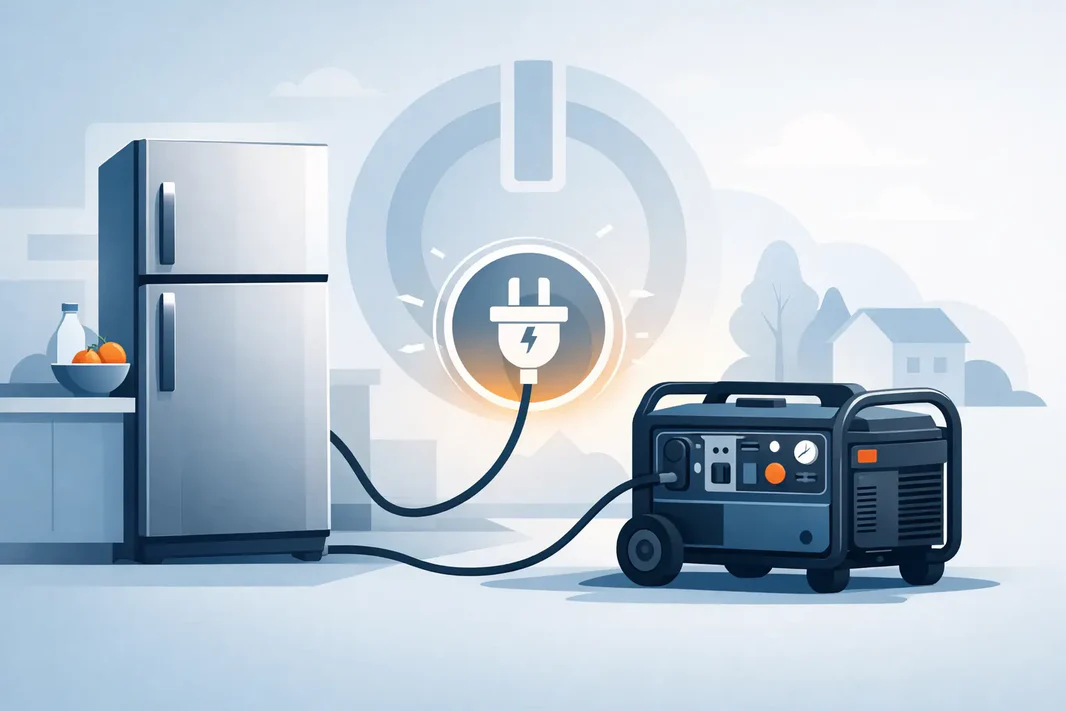
When the power goes out, the refrigerator is usually the first appliance people worry about – and for good reason. Food loss adds up fast, and choosing the wrong generator can leave you with a machine that trips, struggles on startup, or wastes fuel. If you are trying to figure out the right generator wattage for refrigerator use, the key is understanding that a fridge needs one number to keep running and a higher number to start.
Why generator wattage for refrigerator loads is not one-size-fits-all
A refrigerator does not pull the same amount of power every second it is plugged in. Once it is running, the compressor cycles on and off and the wattage stays fairly modest. But when the compressor starts, it can draw a short burst of extra power called starting watts or surge watts. That startup spike is what catches many buyers off guard.
A small modern refrigerator might run at roughly 100 to 200 watts during normal operation, while a full-size kitchen refrigerator often lands closer to 300 to 800 running watts depending on size, age, and efficiency. Startup demand can be 2 to 3 times the running load, and sometimes more with older units. That means a refrigerator that normally runs at 600 watts might briefly need 1,200 to 1,800 watts to start.
This is why a generator that looks good on paper can still fail in real use. If the unit only matches the running wattage and does not have enough surge capacity, the compressor may not start reliably.
How to estimate the right size
The simplest approach is to look for the refrigerator’s running wattage and then account for startup. You can often find electrical details on the appliance label, inside the fridge, on the back panel, or in the owner’s manual. Some labels list amps instead of watts. If that happens, multiply amps by voltage. Most US household refrigerators run on 120 volts.
For example, if the label shows 6 amps, that comes out to about 720 running watts at 120 volts. From there, give yourself enough headroom for startup. In practical terms, many homeowners shopping for outage backup should assume at least 1,200 to 2,000 starting watts for a standard refrigerator unless the manufacturer states otherwise.
If you want a safer cushion, especially with an older fridge or freezer combo, aim beyond the bare minimum. Generators run better and more efficiently when they are not pushed to their limit every time the compressor kicks on.
A quick rule of thumb
If you are powering only one average household refrigerator, a generator with around 2,000 starting watts is often enough. If you are powering a larger refrigerator, an older unit, or a fridge plus a few extras like lights, a router, or a microwave used occasionally, moving into the 3,000 to 4,000 watt range gives you more flexibility.
That does not mean every home needs a larger generator. It means your generator should match the real load you expect during an outage, not just the appliance nameplate.
Running watts vs starting watts
This is the distinction that matters most when buying backup power.
Running watts are the power needed to keep the refrigerator operating once the compressor is already on. Starting watts are the temporary surge needed when the motor starts. Generators are typically rated with both numbers, and you need to check both before making a decision.
If a generator is advertised at 1,800 running watts and 2,200 starting watts, that means it can support a brief higher surge but should not carry that load continuously. For refrigerator use, that surge rating matters every time the compressor cycles back on.
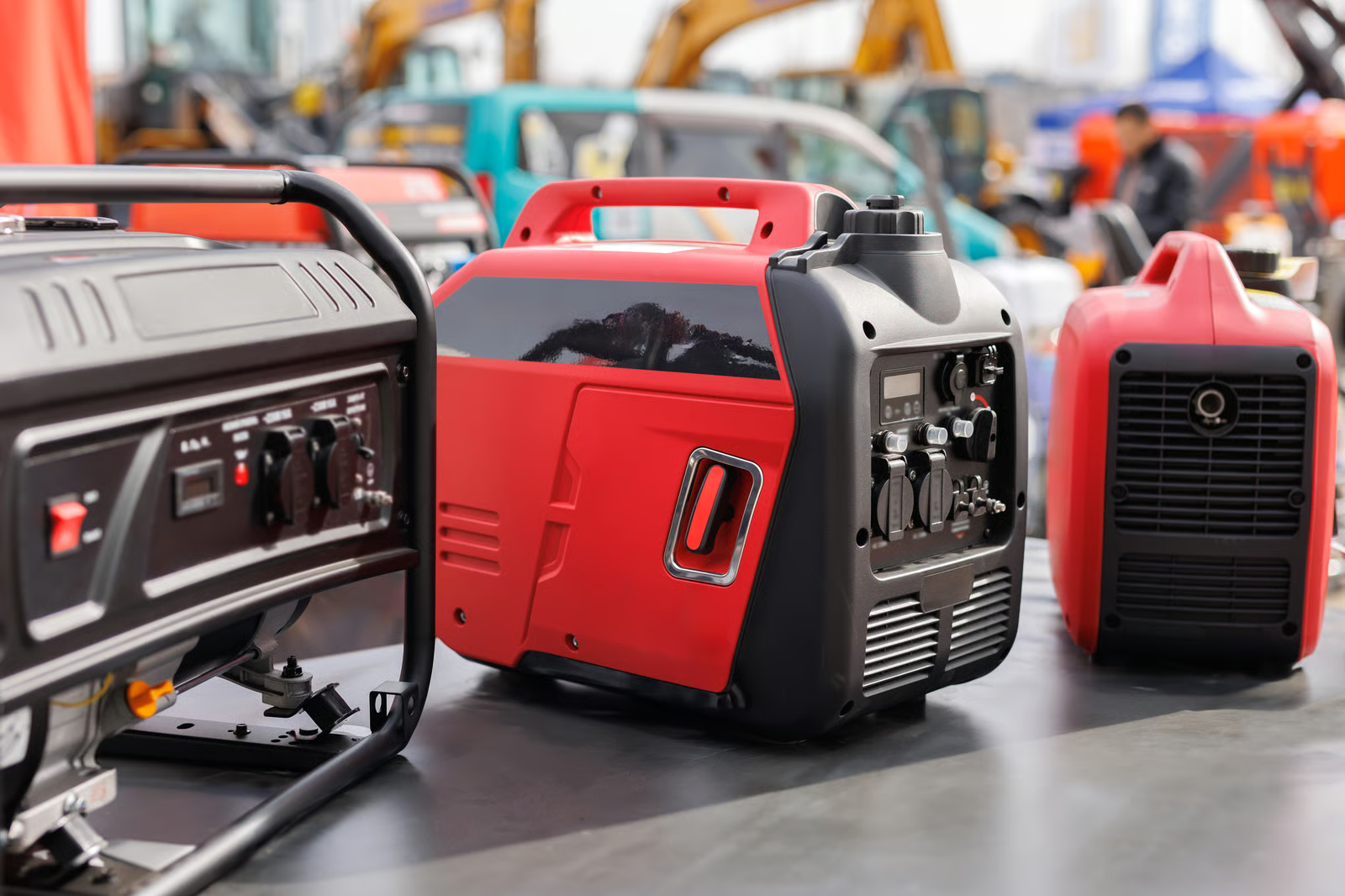
Portable inverter generators often have cleaner power and quieter operation, which many buyers prefer for residential use. Conventional portable generators can work well too, especially for larger outage loads, but the right choice depends on whether you are backing up just the refrigerator or several essentials at once.
What can change refrigerator power demand
Two refrigerators that look similar can have different power needs. Size is only part of the story.
Older refrigerators usually draw more power than newer Energy Star models. Units with ice makers, water dispensers, or larger compressors may need more startup power. Garage refrigerators can also behave differently because extreme temperatures affect compressor cycling. If your backup plan includes a chest freezer too, that adds another motor load with its own startup surge.
There is also the issue of defrost cycles. Some refrigerators temporarily draw more power when automatic defrost functions are active. That does not always drive generator sizing by itself, but it is another reason not to size too tightly.
Should you use the minimum size generator?
Sometimes yes, often no.
If your only goal is to keep one efficient refrigerator alive during occasional outages, a smaller generator can make sense. It may cost less, store more easily, and use less fuel. But minimum sizing leaves less room for aging appliances, extension cord losses, startup spikes, and the reality that most people eventually plug in one more thing.
A little extra capacity usually pays off in convenience. It gives you room for a phone charger, a few lights, a modem, or a small fan without constantly doing wattage math in the dark. For many households, buying a generator that can handle the refrigerator comfortably plus a handful of essentials is the more practical move.
Portable generator, inverter generator, or power station?
For a refrigerator alone, all three can work in the right setup, but the trade-offs are different.
A portable generator is often the most economical path if you want longer runtime and enough output for multiple appliances. Fuel-based units are a strong fit for extended outages, especially when refrigeration is only one part of the backup plan.
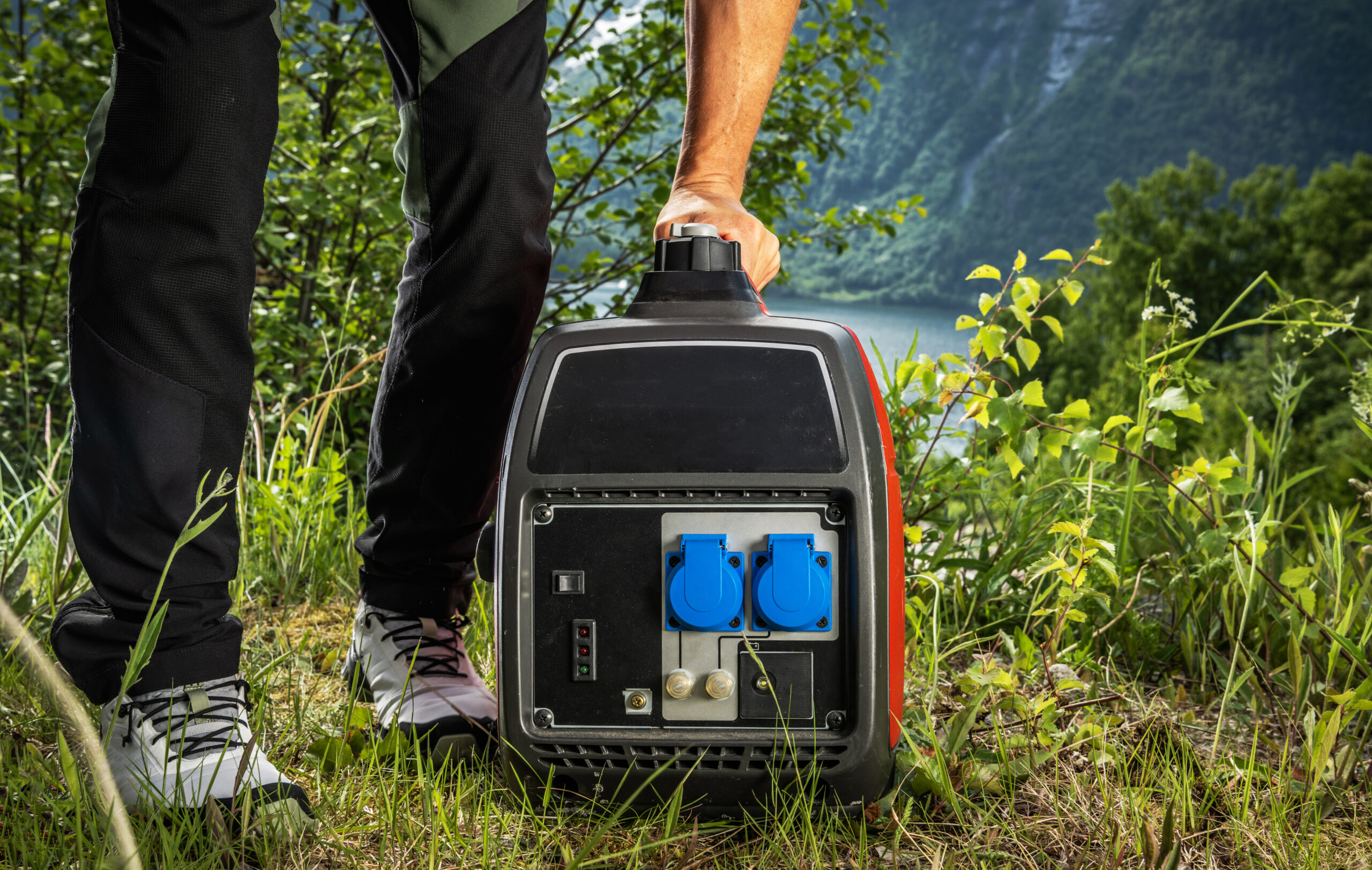
An inverter generator is a smart option when lower noise, better fuel efficiency, and cleaner power matter. Many homeowners like these for occasional outage use because they are easier to live with around the house.
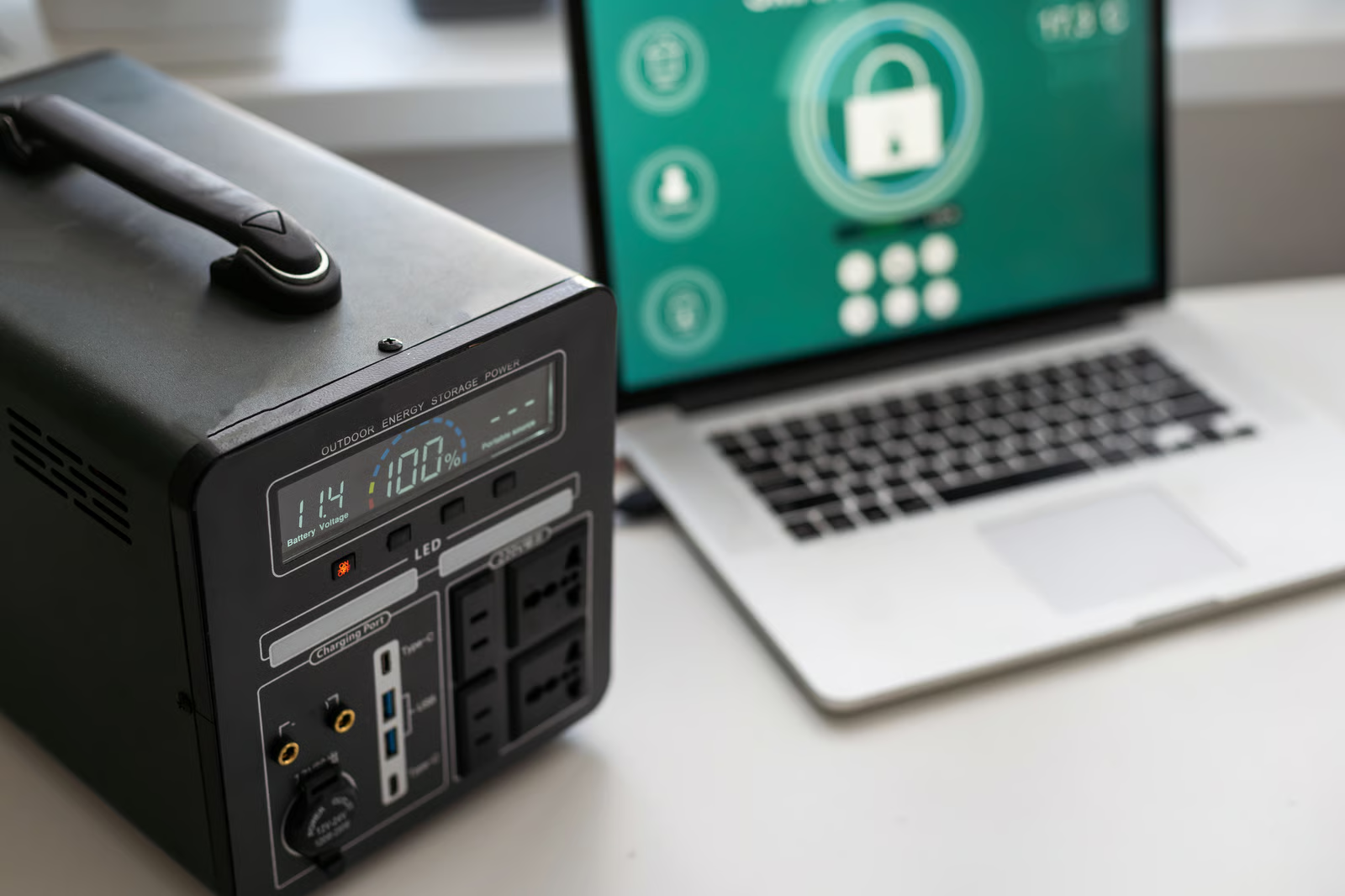
A portable power station can run a refrigerator too, but runtime becomes the bigger question. Battery systems may handle the startup wattage if the inverter is sized correctly, yet how long they keep the fridge running depends on battery capacity, fridge cycling, and whether solar recharging is available. For short outages or targeted backup, they can be a solid solution. For all-day or multi-day outages, capacity planning matters just as much as output.
Common mistakes when sizing generator wattage for refrigerator backup
The first mistake is shopping by running watts alone. A refrigerator that only needs a few hundred watts to run may still fail to start on an undersized generator.
The second is forgetting about everything else. If the generator is also expected to run a freezer, sump pump, coffee maker, or microwave, your refrigerator is no longer the only load that matters. Startup surges can overlap, and that is when breakers trip.
The third is ignoring real-world conditions. Long extension cords, cold weather starts, and older appliances can all make a borderline setup less reliable. On paper, minimum size might work. During a storm, with a cold compressor restarting after being off for hours, it may not.
A practical sizing range for most buyers
If you want a usable starting point, think in ranges instead of one magic number.
For a compact or newer efficient refrigerator, a generator with 1,500 to 2,000 starting watts may be enough. For a typical full-size kitchen refrigerator, many buyers should look at 2,000 to 3,000 starting watts. If you want to run the refrigerator plus a few core household items, 3,000 to 4,500 watts is often the more comfortable range.
For whole-home backup or larger kitchen loads that include refrigeration along with heating system controls, lights, and other essentials, the right answer moves well beyond fridge sizing. At that point, it makes sense to build your generator plan around the full outage load, not just one appliance.
The best way to shop with confidence
Start with your refrigerator label if possible. Confirm voltage, amps, or watts. Then compare that to generator running and starting ratings, not just the headline number. Give yourself some cushion, especially if your appliance is older or your outage plan includes more than food preservation.
This is where a product-led approach helps. Instead of asking whether a generator can technically run a refrigerator, ask whether it can do it comfortably, repeatedly, and with enough margin to handle real outage conditions. That is usually the difference between a backup plan that works and one that feels shaky.
If you are comparing fuel generators, inverter models, or battery-based backup options, keep both output and runtime in view. GenVault shoppers often come in looking for one answer and realize they are really solving two problems at once – starting the refrigerator and staying powered long enough to ride out the outage.
A refrigerator does not ask for much most of the time. It just asks for enough power at the exact moment the compressor starts, and that is the number worth getting right.