
A power station that runs your fridge for one outage and struggles the next is not necessarily failing. In most cases, the real question is not just how long power stations last on a single charge – it is how many years they stay useful before battery aging, heavy loads, and charging habits start cutting into performance.
That matters whether you are buying backup power for storms, packing for RV travel, or setting up a solar-ready system for off-grid use. A power station can last a few hours, a full day, or several days depending on what you run. Its overall lifespan can be anywhere from a few years to well beyond a decade, depending on the battery chemistry, usage pattern, and how well it is maintained.
How long power stations last on a charge
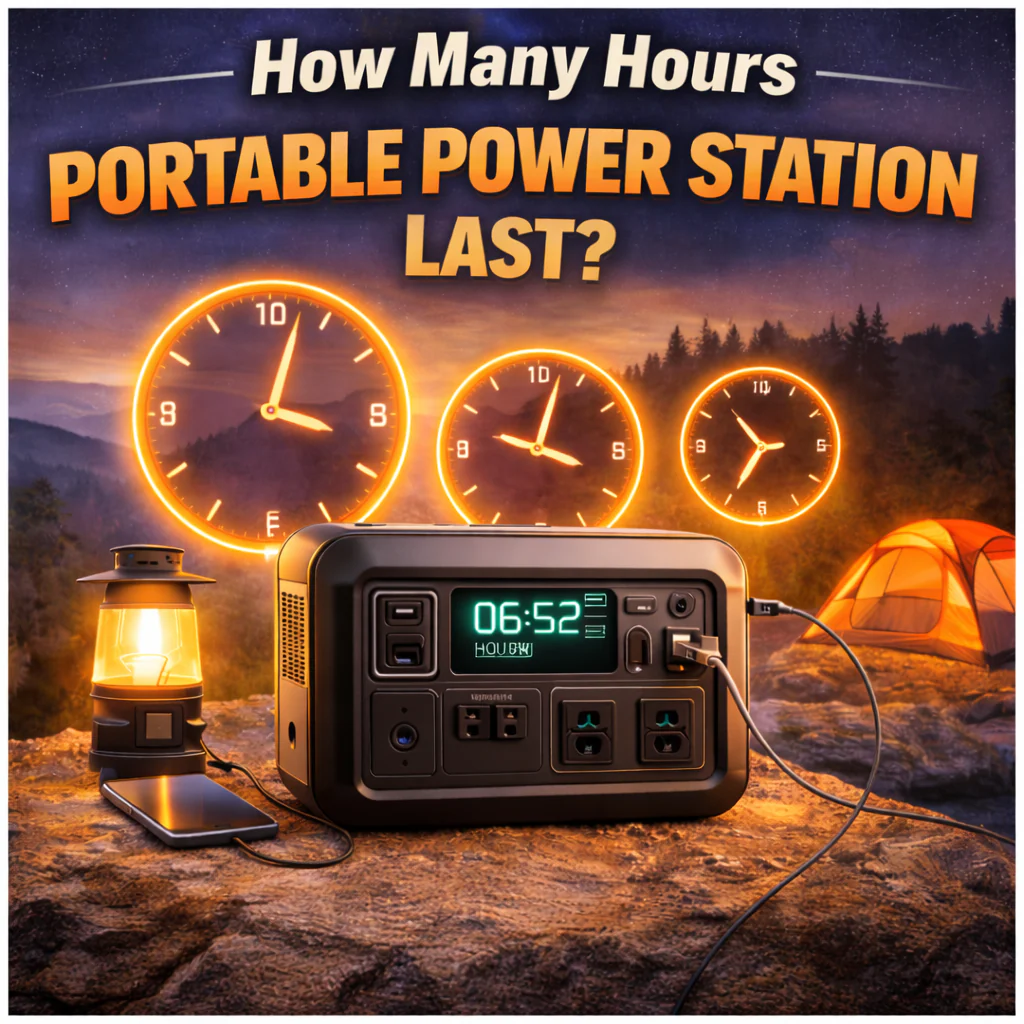
Runtime is the first thing most shoppers mean when they ask how long power stations last. The answer depends on battery capacity, the wattage of your devices, inverter losses, and whether you are recharging with wall power, a vehicle, or solar.
A small portable power station in the 200Wh to 300Wh range might keep phones, lights, a laptop, or a modem running for several hours. Step up to a 500Wh to 1000Wh unit and you may cover a CPAP machine overnight, a TV for an evening, or a small fridge for part of a day. Larger units in the 1500Wh to 3000Wh range can support more demanding backup needs, especially when paired with solar panels.
The catch is that rated battery capacity is not the same as usable runtime at the outlet. If a power station stores 1000Wh, you will not always get the full 1000 watt-hours delivered to your appliance. The inverter and internal electronics use some energy, and high-draw devices can make the battery drain faster than many shoppers expect.
For example, a 1000Wh power station running a 100-watt device may last around 8 to 9 hours in real use, not a perfect 10. Run a 700-watt microwave or coffee maker, and the same unit may be depleted in a little over an hour of actual runtime. If you are planning for outages, that difference matters.
How long power stations last over the years
The longer-term answer to how long power stations last comes down to battery cycle life and calendar aging. A battery cycle is one full discharge and recharge, though partial cycles add up too. Every battery gradually loses capacity over time.
Most older or lower-cost power stations use lithium-ion or lithium NMC batteries. These are compact and efficient, but they usually have a shorter cycle life than newer lithium iron phosphate batteries, also called LiFePO4 or LFP. A lithium-ion power station may deliver roughly 500 to 800 cycles before dropping to about 80 percent of original capacity. An LFP model can often reach 2000 to 3500 cycles or more before hitting that same point.
That does not mean the power station stops working at 80 percent. It means the battery no longer holds as much energy as it did when new. A unit that once gave you 10 hours on a small load may now give you 8. For many buyers, that is still perfectly usable.
If you use a power station only for occasional emergencies and weekend trips, even a moderate cycle life can translate into many years of service. If you use it daily for work, van life, or off-grid support, cycle life becomes a much bigger buying factor.
What affects how long power stations last
Battery chemistry is the big one, but it is not the only factor. Heat is one of the fastest ways to shorten battery life. Leaving a unit in a hot garage, truck bed, or enclosed RV during summer can age the battery faster than normal indoor storage.
Charging habits matter too. Constantly draining a battery to zero and charging it back to 100 percent puts more stress on it than shallower cycling. Many modern units have battery management systems that help protect the cells, but user habits still affect long-term results.
Load size also plays a role. Running near the unit’s maximum output for long stretches creates more heat and strain than powering smaller electronics. That does not mean you should avoid using the power station as intended. It just means heavy, repeated use tends to age a system faster than lighter duty use.
Build quality matters as well. Better internal components, thermal management, and battery controls often lead to better long-term reliability. Two power stations with the same advertised capacity can age very differently depending on design and component quality.
How long power stations last compared by battery type
If you are deciding between models, battery chemistry deserves a close look.
Lithium-ion and NMC models
These are common in lighter, more compact units. They are a solid fit for occasional use, travel, and buyers who prioritize portability. The trade-off is that they usually offer fewer charge cycles than LFP batteries.
For someone who uses a power station a few times a year, that may be completely fine. For someone who plans to cycle the unit every day, it may not be the best long-term value.
LiFePO4 and LFP models
These batteries are heavier, but they are often the better choice for backup power, frequent use, and longer ownership. They typically last much longer in cycle terms and hold up well in demanding applications.
This is why many buyers shopping for home backup or solar generator setups now lean toward LFP. A higher upfront cost can make sense if the unit is going to be used often or kept for years.
How to make a power station last longer
If you want more life from your investment, a few habits make a real difference. Store the unit in a cool, dry place. Avoid leaving it fully discharged for long periods. If the manufacturer recommends a storage charge level, follow it. For many units, storing around 50 to 80 percent is better than parking it at zero.
It also helps to check the battery every few months during long-term storage and top it off when needed. If you own a solar-ready setup, use appropriately matched panels and charge controllers or built-in inputs rather than trying to force unsupported charging methods.
Try not to treat a portable power station like a permanent whole-house system unless it was built for that role. There is a difference between emergency backup and everyday deep cycling. Matching the unit to the job is one of the best ways to protect lifespan.
How long power stations last for outage backup
For outage readiness, the better question is often whether the unit can support the loads that matter most, for long enough, without excessive cycling. Phones, routers, lights, fans, CPAP machines, and small kitchen devices are usually a good fit. Space heaters, central AC, electric dryers, and full-size ovens are a different story.
That is where a lot of buying mistakes happen. Shoppers focus on the word power station and assume it can replace a fuel generator for every appliance in the house. Some can handle serious backup tasks, but many are better used for essential circuits and smaller devices.
If your goal is overnight refrigeration, internet access, phone charging, and a few lights, a well-sized battery power station can work very well. If your goal is to run large 240V loads for extended outages, you may need a larger battery system, expandable storage, a standby generator, or a mixed setup.
So, how long power stations last in real life?
In real use, most quality power stations last anywhere from 3 to 10 years or more, depending on battery type and usage. Lighter-duty lithium-ion units often land on the lower end if used regularly. LiFePO4 models commonly last longer, especially when stored properly and not pushed hard in extreme heat.
On a single charge, runtime can range from a few hours for high-draw appliances to a day or more for light essentials. There is no one-size-fits-all number because usage changes everything.
If you are shopping for dependable backup power, think beyond the first outage. Look at battery chemistry, cycle rating, usable capacity, output limits, and how you actually plan to use the unit. That is how you end up with a power station that does not just work on paper, but keeps showing up when the lights go out.
If you are comparing options for home backup, travel, or solar-ready power, GenVault carries a wide range of portable power solutions built for different runtime needs and ownership goals. The right unit is the one you will trust not just this season, but years from now.