
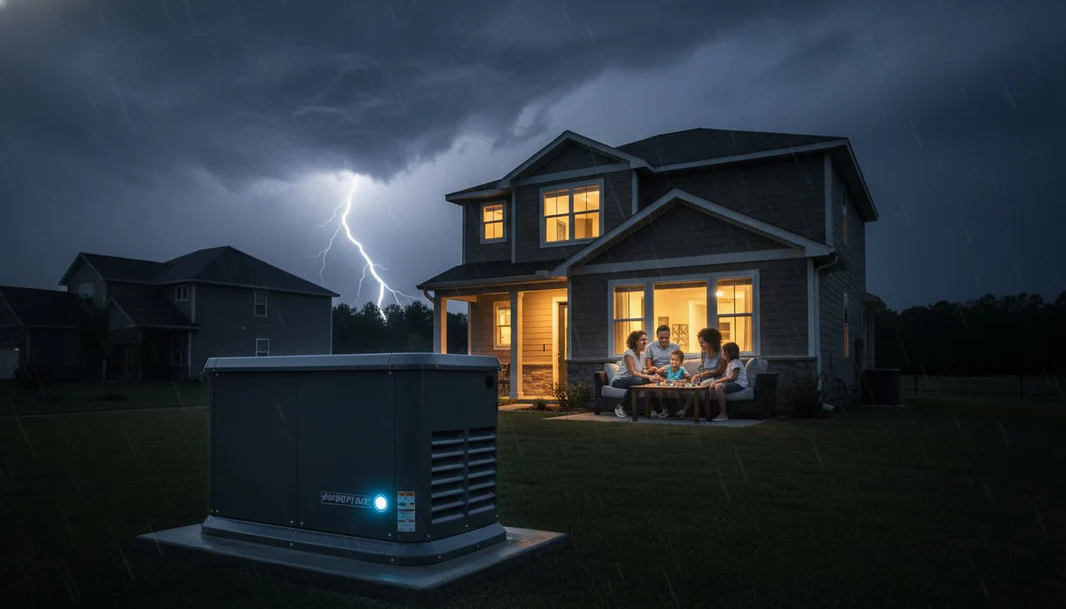
On July 15, 2024, homeowner Mark Stevens discovered that his lack of backup power led to $15,000 in water damage after a 48-hour outage silenced his sump pump. It’s a stark reminder that a backup plan isn’t a luxury; it’s a critical component of home infrastructure. You likely agree that investing in standby generators feels like a high-stakes gamble when you’re staring at complex spec sheets and five-figure price tags. It’s difficult to balance the need for reliable HVAC performance against the desire for a reasonable return on investment.
This guide replaces that uncertainty with technical clarity. You’ll learn how to master kilowatt sizing and fuel selection so you don’t overpay for capacity you’ll never use. We’ll provide a data-driven comparison of Kohler and Briggs & Stratton units to ensure your 2026 power strategy is built on a foundation of proven reliability.
Key Takeaways
- Understand how the Automatic Transfer Switch (ATS) provides a seamless transition to backup power within seconds of a grid failure.
- Learn to accurately size standby generators by distinguishing between essential “must-run” appliances and high-draw climate control systems.
- Analyze the technical performance differences between Kohler’s commercial-grade engines and the compact, high-output designs of Briggs & Stratton.
- Determine the optimal fuel source for your site by assessing the specific gas pressure and meter requirements for high-wattage units.
- Identify the most reliable hardware solutions for 2026, ranging from comprehensive 26kW whole-home systems to efficient 14kW units.
What is a Standby Generator and Why Does Your Home Need One?
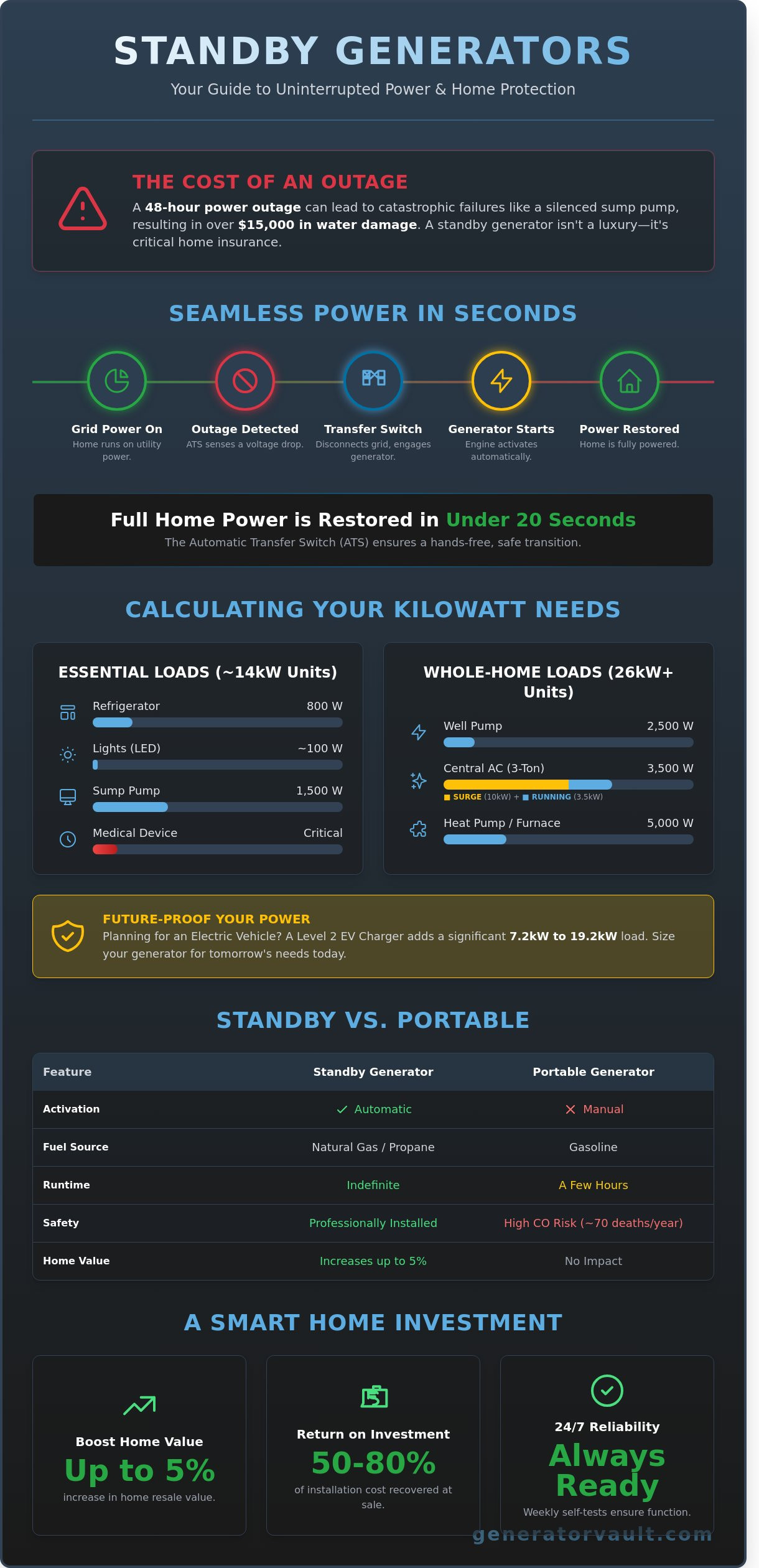
A standby generator is a permanent backup power solution that integrates directly with your home’s electrical system. Unlike temporary fixes, these units are professionally installed on a concrete pad outside your residence, much like an outdoor air conditioning condenser. To understand the technical foundation, one might ask, What is a Standby Generator? and how does it differ from a standard engine? At its core, it’s a sophisticated piece of infrastructure designed to provide seamless power during grid failures. The system relies on an Automatic Transfer Switch (ATS) that constantly monitors incoming utility power. When a voltage drop is detected, the ATS disconnects the utility line and engages the generator, typically restoring full power to the home in under 20 seconds.
Homeowners often view standby generators as a long term investment rather than a simple appliance. Beyond immediate utility, these systems significantly impact residential real estate appraisals. Data from various housing market analyses suggests that a backup power system can increase a home’s resale value by up to 5%. In many cases, homeowners see a return on investment (ROI) ranging from 50% to 80% of the installation cost. This financial benefit is driven by the increasing frequency of grid instability and the high demand for “disaster-proof” housing.
The Peace of Mind Factor: Automatic Operation
Modern standby units provide 24/7 monitoring capabilities that function whether you’re at home or miles away. This “hands-free” operation is vital for protecting critical home systems. For instance, a basement sump pump requires constant power to prevent flooding during a storm; a single failure can result in over $10,000 in water damage. For households relying on medical equipment like oxygen concentrators, this immediate response is a matter of safety. To maintain reliability, these units perform self-exercise cycles. Every week, the generator runs for 5 to 15 minutes to lubricate the engine and test the battery, ensuring the hardware is ready for a real emergency.
Standby vs. Portable: A Long-Term Cost-Benefit Analysis
While the initial cost of standby generators is higher than portable models, the long-term reliability is unmatched. Portable units require manual setup, refueling with gasoline every few hours, and a network of extension cords. In contrast, standby units run on your home’s existing natural gas or liquid propane supply, providing an indefinite runtime. Safety is another major differentiator. Portable generators are linked to approximately 70 carbon monoxide deaths annually in the United States due to improper placement. Standby systems eliminate this risk through permanent, outdoor installation and dedicated exhaust venting. For a more detailed breakdown of different power tiers, consult our home generators guide to see how these systems compare to smaller portable alternatives.
How to Size a Standby Generator: Calculating Your Kilowatt Needs
Accurately sizing standby generators requires a systematic audit of your home’s electrical demand. You can’t guess this number. Start by identifying your “Must-Run” appliances. A standard refrigerator pulls 600 to 800 watts, while a deep well pump often requires 2,500 watts just to operate. If you rely on a medical device or a home security system, these must be the foundation of your calculation.
Next, account for high-draw items. A 3-ton central air conditioner typically consumes 3,500 running watts, but it’s the starting wattage that matters most. You must distinguish between running (rated) wattage and starting (surge) wattage. Electric motors require a massive burst of energy to break inertia. If that 3-ton AC unit runs at 3,500 watts, it might spike to 10,000 watts for a fraction of a second. If your generator can’t handle that surge, the system will trip. Adhering to Generator Safety Guidelines ensures your system remains stable during these high-load transitions.
Plan for 2026 technology standards by factoring in future home expansions. A Level 2 electric vehicle charger adds a significant 7.2kW to 19.2kW demand to your panel. If you plan to transition to an EV in the next 24 months, sizing your generator for that load now is more cost-effective than upgrading the entire unit later. You can explore high-capacity models to see which units accommodate these modern power requirements.
Essential Load vs. Whole-House Coverage
An 11kW to 14kW unit is often sufficient for essential circuits like lights, refrigeration, and a single small HVAC zone. This setup uses a protected-load switch to power only specific breakers. If you have a home exceeding 2,500 square feet with multiple AC units, you’ll likely need a 26kW unit. Don’t rely on square footage alone. A 4,000 square foot home with gas heating and a gas water heater often requires less power than a 2,000 square foot all-electric home.
The Role of Smart Load Management
Load-shedding technology allows a 20kW unit to perform like a 25kW unit by prioritizing power. It manages the sequence of appliance activation; for example, it might temporarily pause the electric water heater while the AC compressor starts. This prevents the generator from overloading. Avoid over-sizing your generator by more than 20 percent of your peak calculated load. Running a large generator at less than 30 percent capacity leads to “wet stacking,” where unburnt fuel accumulates in the exhaust, reducing the engine’s lifespan and efficiency.
Kohler vs. Briggs & Stratton: Choosing the Right Brand
Selecting between these two industry giants depends on your specific property constraints and the sensitivity of your electrical load. Kohler builds residential standby generators using the same heavy-duty engine architecture found in their hospital and data center backup systems. Briggs & Stratton focuses on maximizing power density, offering the most kilowatts per square foot of installation space. Both brands provide essential security, yet their engineering philosophies cater to different homeowner priorities.
Kohler Generators: The Gold Standard of Reliability
The Kohler 14kW and 26kW models represent the pinnacle of residential power engineering. These units maintain a Total Harmonic Distortion (THD) of less than 5 percent, which is the critical threshold required to prevent damage to microcircuitry in modern HVAC controllers and high-end appliances. Kohler utilizes its Command PRO commercial engine series in these units. These engines feature hydraulic valve lifters that eliminate the need for expensive, routine valve adjustments that other brands require every 200 hours of operation.
Durability extends to the exterior housing. Every Kohler residential unit comes standard with a corrosion-proof aluminum enclosure. This material choice is a non-negotiable requirement for homes located within 50 miles of a coastline. Salt air can degrade standard steel enclosures in less than 36 months; Kohler’s aluminum builds are tested to withstand 3,000 hours of salt spray exposure. It’s the logical choice for homeowners who view power backup as a 20-year investment rather than a temporary fix.
Briggs & Stratton: Innovation and Value
The PowerProtect series from Briggs & Stratton delivers a high-output 26kW solution that occupies a footprint 25 percent smaller than many competing models. This compact design is paired with an advanced airflow system that directs exhaust away from the structure. This engineering allows for installation as close as 18 inches to the home, provided local building codes permit. It’s an ideal solution for suburban lots where space between the house and the property line is limited.
Homeowners often choose this brand when they need the highest wattage possible for their dollar. The 26kW unit provides enough surge capacity to start multiple 5-ton air conditioning units simultaneously without causing a brownout. Their warranty structure is also a significant draw. The PowerProtect line includes a 6-year limited warranty that covers parts, labor, and travel for the entire duration. This is a step above the industry standard 5-year terms that often exclude travel costs after the first two years.
- Engine Build: Kohler uses overhead valve (OHV) commercial engines; Briggs & Stratton utilizes high-displacement Vanguard engines designed for heavy debris environments.
- Enclosure Materials: Kohler uses 100 percent aluminum; Briggs & Stratton offers both corrosion-resistant Galvanneal steel and aluminum options depending on the model.
- Service Network: Both manufacturers maintain over 2,500 certified technicians across North America, ensuring parts availability within 48 hours in most metropolitan regions.
Fuel Sources and Installation Requirements
Choosing the right fuel source is a foundational step in securing your energy independence. Most standby generators run on either natural gas (NG) or liquid propane (LP). This decision isn’t just about what’s available; it’s about the physics of energy density and the logistics of long-term reliability. Your choice directly impacts the engine’s power output and your home’s infrastructure requirements.
Natural Gas vs. Propane: Pros and Cons
Natural gas is the primary choice for 85% of suburban homeowners because it provides an uninterrupted fuel supply. You don’t have to monitor tank levels or schedule deliveries during a storm. However, NG has a lower energy density than propane. A generator rated for 26kW on propane might only produce 24kW on natural gas. This 8% to 10% performance drop is a critical factor during the sizing phase. Propane is the standard for rural properties where utility lines don’t reach. It burns cleaner and offers higher BTU values, but it requires an on-site tank, usually 500 to 1,000 gallons, to ensure a week of continuous runtime.
Preparing Your Home for Installation
Site selection is governed by strict safety codes. NFPA 37 standards require the unit to sit at least 5 feet from any window, door, or soffit vent to prevent carbon monoxide from entering your living space. Most modern units allow for an 18-inch clearance from the home’s exterior wall, provided the siding is non-combustible. You’ll need a level surface, typically a 3-inch thick reinforced concrete pad or a high-density pre-cast mounting base, to prevent the unit from shifting during operation.
Infrastructure upgrades are often necessary. A high-capacity 22kW unit can demand up to 281,000 BTUs per hour at full load. If your current gas meter is only rated for 250 CFH (Cubic Feet per Hour), it won’t support both your generator and your home’s heating system. Utility companies typically charge between $300 and $600 for a meter upgrade to handle this increased volume. Professional installation isn’t just a recommendation; it’s a requirement for maintaining your 5-year or 10-year factory warranty. Licensed technicians ensure the automatic transfer switch integrates safely with your main electrical panel, preventing dangerous backfeeding into the utility grid.
Ready to protect your home with a reliable power solution? Explore our range of high-performance standby generators to find the perfect fit for your property.
Top Standby Generator Recommendations for 2026
Selecting the right hardware for your property requires balancing peak surge requirements with long-term fuel efficiency. For 2026, the market has stabilized around high-output residential units that offer commercial-grade reliability. These standby generators are engineered to handle the increased electrical demands of modern smart homes and electric vehicle charging stations.
The Best for Small-to-Midsize Homes: Kohler 14kW Standby Unit
If your load calculation focuses on essential appliances like well pumps, refrigerators, and heating systems, the 14kW model is the most efficient choice. It uses significantly less fuel than larger units while providing enough peak wattage to start heavy motors. The compact enclosure allows for flexible installation in residential areas where space is at a premium.
The High-Output Value Leader: Briggs & Stratton 26kW PowerProtect
This model offers the highest power density in its class. It features a compact footprint that fits into tighter lot lines without sacrificing the 26,000 watts needed for large luxury homes. It’s an excellent choice for those prioritizing cost-per-kilowatt, delivering 25% more power on natural gas than some competing models in the same price bracket.
The Commercial Powerhouse: Kohler 48kW 3-Phase
For large estates or small businesses requiring 3-phase power, this 48kW unit is the definitive solution. It utilizes a liquid-cooled engine designed for extended runtimes. This is the hardware you choose when failure isn’t an option for medical equipment, data servers, or industrial refrigeration systems.
Why Buy from Generator Vault?
Selecting one of our standby generators is a 15-year commitment to your property’s safety. As an authorized retailer, we ensure every unit includes the full manufacturer warranty, protecting your investment from day one. You won’t deal with the risks associated with third-party liquidators. We provide free shipping across the contiguous United States, which saves you an average of $300 to $500 in freight costs on these heavy machines. Our flexible financing options allow you to spread the cost of this essential infrastructure over time, making power independence accessible for more households.
Take the Next Step Toward Power Independence
Don’t wait for a storm warning to start your preparations. Standby units are high-demand items, and lead times often increase by 30% during hurricane and winter storm seasons. Use your specific kW calculations to choose the model that fits your home’s unique energy profile. Shop our full collection of Standby Generators today to secure your home against the next grid failure and ensure your family’s comfort.
Secure Your Energy Independence for 2026
Selecting a backup system is a technical decision that dictates your home’s resilience for the next 20 years. By 2026, residential power demands have shifted, making it vital to choose between a 14kW unit for basic needs or a 26kW model for full-scale HVAC support. Kohler and Briggs & Stratton lead the industry with engines designed for 1,000 plus hours of runtime. Finalizing your installation plan and fuel source now prevents the logistical bottlenecks often seen during peak storm seasons.
Generator Vault operates as your authorized Kohler and Briggs & Stratton dealer, ensuring every technical specification meets rigorous standards. We provide free shipping on all units and offer flexible financing to streamline your procurement process. Take the final step toward a reliable power strategy by reviewing our inventory of standby generators to find the exact match for your kilowatt requirements.
Browse All Standby Generators at Generator Vault
You’re now equipped with the data needed to protect your property and family with confidence.
Frequently Asked Questions
How much does a standby generator cost with installation?
A professional standby generator installation typically costs between $5,000 and $15,000 for a standard residential property. The hardware itself accounts for $3,000 to $6,000, while electrical labor, gas line plumbing, and permitting add another $2,000 to $9,000 to the total. Prices fluctuate based on the distance between your fuel source and the transfer switch location.
Will a 20kW generator run my whole house?
A 20kW unit will power most 2,500 square foot homes including high-demand appliances like a 5-ton central air conditioner. These standby generators manage critical loads such as refrigerators, well pumps, and security systems simultaneously without tripping the circuit breaker. If your home uses multiple electric water heaters or double ovens, you should perform a detailed load calculation to ensure 20kW covers your peak surge requirements.
How long can a standby generator run continuously?
Standby generators can run for approximately 500 hours before requiring a mandatory shutdown for oil and filter changes. If your unit is connected to a municipal natural gas line, it has a virtually indefinite fuel supply during an outage. For those using on-site propane, a 500-gallon tank usually provides 7 to 10 days of continuous power at a 50% load level.
Do standby generators require regular maintenance?
Yes, you must service your generator every 200 operating hours or at least once per calendar year. Maintenance involves changing the synthetic oil, replacing air filters, and testing the battery’s cold cranking amps. Most 2026 models include an automated weekly exercise cycle that runs for 12 minutes to lubricate engine seals and ensure the system is ready for a sudden utility failure.
Does a standby generator increase home value?
Installing a permanent power solution increases home value by an average of 3% to 5% according to national real estate trends. Data from 2023 indicates that homeowners recoup about 54% of their initial investment upon resale. Buyers in areas with frequent grid instability or severe weather patterns prioritize homes with existing backup infrastructure, often leading to faster closing times.
What is the lifespan of a Kohler standby generator?
A Kohler standby generator lasts between 20 and 25 years when you follow the manufacturer’s prescribed service intervals. These units are rated for 2,000 to 3,000 total operating hours, which exceeds the requirements of most residential applications. Because Kohler utilizes commercial-grade engines, the internal components withstand the thermal stress of running for several days at a time during extended grid outages.
Can I install a standby generator myself?
You shouldn’t attempt a DIY installation because the process requires licensed expertise in both high-voltage electricity and gas plumbing. Professional installers manage the necessary municipal permits and ensure the unit meets NFPA 37 fire clearance standards. Furthermore, most manufacturers will void your 5-year or 10-year warranty if the system isn’t commissioned by a certified technician who can verify the gas pressure and voltage regulation.
How loud are standby generators during operation?
Most modern units produce between 65 and 70 decibels (dB) when measured from a distance of 23 feet. This noise level is roughly equivalent to a standard central air conditioning condenser or a large vacuum cleaner. Premium aluminum enclosures with acoustic foam dampening help minimize vibrations, and many models feature a low-RPM exercise mode that reduces sound to 58 dB during routine weekly testing.