
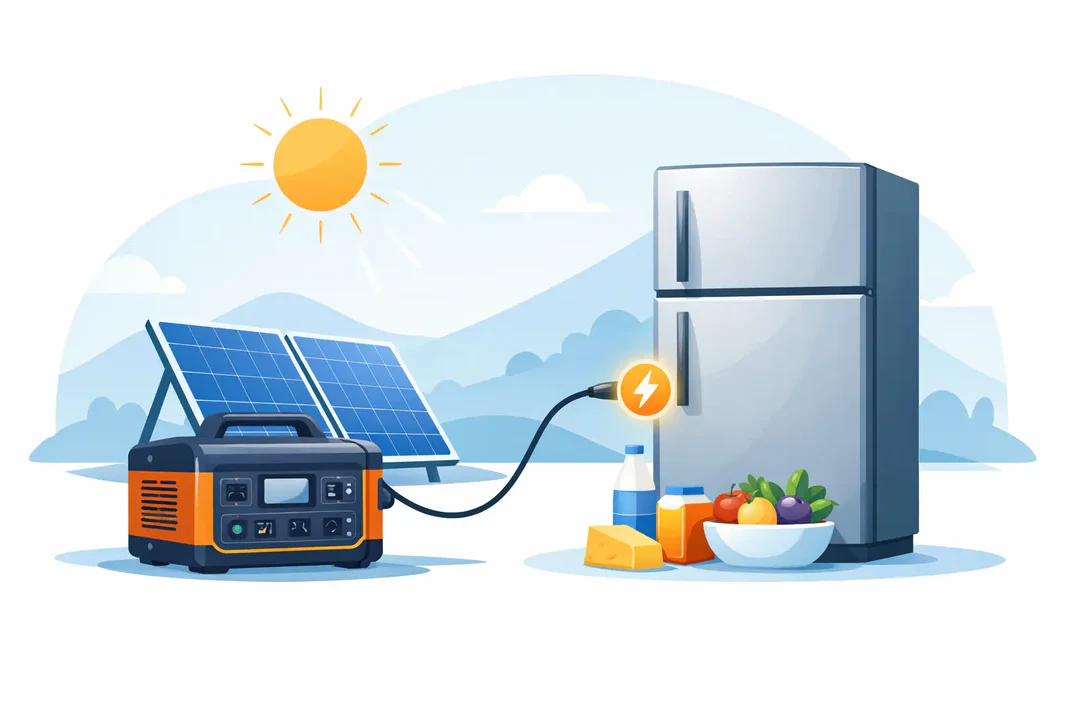
A refrigerator is one of the first appliances people worry about during an outage, and for good reason. If you’re asking, can a solar generator run a refrigerator, the short answer is yes – but only if the generator is sized correctly for the fridge’s startup surge, daily energy use, and the amount of sunlight available to recharge it.
That last part matters more than most buyers expect. A fridge does not pull the same amount of power every second of the day, and a solar generator does not produce the same output every hour of the day. Matching those two realities is what determines whether your setup feels dependable or frustrating.
Can a solar generator run a refrigerator reliably?
Yes, a properly sized solar generator can run many refrigerators reliably, especially during short outages, overnight use, RV travel, and off-grid backup situations. The catch is that “refrigerator” is a broad category. A compact dorm fridge is a very different load than a full-size French door model with an ice maker.
Most modern refrigerators cycle on and off throughout the day rather than drawing constant power. They may run at a modest wattage once the compressor is on, but the startup surge can briefly spike much higher. That surge is where undersized power stations often fail. A unit may look large enough based on running watts alone, then shut off when the compressor kicks on.
For many homes, the safest approach is to choose a solar generator with enough inverter capacity to handle compressor startup and enough battery storage to cover several hours of cycling without constant recharging.
What size solar generator do you need?
The right size depends on three numbers: running watts, surge watts, and battery capacity in watt-hours.
A typical residential refrigerator often runs somewhere around 100 to 250 watts once operating, but startup can jump to 600 watts or more depending on the model. Larger units can demand even more. If your refrigerator has features like a built-in ice maker, water dispenser, or older less-efficient compressor, power needs can climb.
Battery capacity determines runtime. A 1,000Wh power station does not mean a refrigerator will run for 10 hours at a steady 100 watts in real-world conditions. There are inverter losses, compressor cycling, ambient temperature changes, and battery reserve considerations. In practice, actual runtime is usually lower than the simple math suggests.
As a general buying framework, a small portable power station may be enough for a mini fridge or very short backup use. For a standard kitchen refrigerator, many buyers are better served by a mid-size or larger solar generator with at least enough inverter headroom for startup and enough battery capacity to avoid constant monitoring.
A practical sizing example
If your refrigerator averages 150 running watts and needs 1,000 surge watts at startup, your solar generator should comfortably exceed that surge requirement. If the fridge uses roughly 1 to 2 kWh per day, a battery in the 1,500Wh to 2,000Wh range may cover part of a day or overnight use, but solar input and usage conditions will decide how sustainable that setup is.
If your goal is outage protection for a full-size refrigerator plus some extra essentials like lights, phone charging, or a router, stepping up in battery size usually makes more sense than buying right at the minimum.
The two specs that matter most
When people shop for a solar generator, they often focus on battery size first. That is important, but inverter output can be the dealbreaker.
Inverter output and surge capacity
Your solar generator must have enough continuous wattage to run the fridge and enough surge capacity to start the compressor. If it cannot handle startup, the refrigerator may never begin cooling even if the battery is full.
This is why product pages that clearly list both continuous and surge ratings are easier to shop with confidence. A refrigerator load is not the same as charging a laptop or running LED lights.
Battery capacity and runtime
Battery capacity tells you how long the unit can support the appliance before needing a recharge. Bigger battery banks give you more margin during cloudy weather, overnight hours, or extended outages.
That extra margin is not just about convenience. It reduces the pressure to perfectly time solar charging every day, which is especially helpful during emergencies.
What affects refrigerator runtime on solar power?
Two refrigerators with similar labels can perform very differently in the field. Runtime depends on the appliance, the weather, and how you use it.
A newer Energy Star fridge generally uses less power than an older model. A full fridge also tends to hold cold better than an empty one. Hot garages make compressors work harder. Frequent door openings increase cycling. If you are running the fridge during a summer outage, expect more battery drain than you would in a cool basement.
Solar charging conditions matter just as much. A generator paired with enough solar panels may refill during the day and carry the fridge through evening hours. In poor weather or shaded conditions, that same system may only partially recharge, reducing your buffer for the next night.
This is where expectations need to be realistic. A solar generator can absolutely support refrigeration, but extended off-grid operation depends on the full system, not just the battery box.
Can a solar generator run a refrigerator and other appliances?
Sometimes yes, but this is where load management becomes important. A refrigerator may only use moderate running power, yet adding a microwave, coffee maker, space heater, or toaster can overwhelm the inverter fast.
If your main priority is food preservation during an outage, it is usually smarter to reserve the system for the refrigerator and a few low-draw essentials. Running everything at once can shorten runtime and increase the chance of overload.
For buyers comparing options, this is often the dividing line between a portable convenience unit and a more serious home backup system. If you want refrigeration plus multiple household circuits or extended autonomy, you may need a larger battery platform, more solar input, or a different backup approach entirely.
How to check whether your fridge will work
Before buying, look at your refrigerator’s label or owner’s manual for wattage or amperage. If only amperage is listed, multiply amps by volts to estimate watts. In the US, that is typically 120 volts for a standard refrigerator.
If the label does not clearly show startup demand, allow extra headroom. Compressor appliances are not good candidates for exact-minimum sizing. A little buffer goes a long way toward reliable starts and better long-term performance.
It also helps to think about your actual use case. Are you trying to keep food cold for a six-hour outage? Power a garage fridge through storm season? Support an RV refrigerator while traveling? Run a household fridge during multi-day emergencies with solar replenishment? Those are different jobs, and the right system size changes with them.
When a solar generator is a good fit
A solar generator makes a lot of sense if you want quiet operation, indoor-safe battery power, and the ability to recharge from sunlight without relying on fuel. For homeowners who want backup for essentials, RV users who need portable refrigeration support, and preparedness shoppers building a cleaner power setup, it can be a practical option.
It is especially appealing when noise, maintenance, and fuel storage are concerns. There is no engine to idle, no gasoline to rotate, and no exhaust to manage. That simplicity is part of the value.
The trade-off is capacity. If your expectation is whole-home backup or running large heating appliances alongside refrigeration, a solar generator may not be the most cost-effective answer unless you move into larger expandable systems.
When you may need something bigger
If you have a large older refrigerator, frequent outages, limited sunlight, or want to power several major appliances at once, you may outgrow a smaller solar setup quickly. In those cases, a larger expandable battery system, a traditional generator, or a layered backup plan may be the better choice.
A lot of buyers land on a hybrid strategy: battery power for quiet indoor essentials and a fuel-based generator for heavier loads or longer outages. That gives you flexibility instead of forcing one product type to do every job.
If you are comparing options for outage readiness, RV travel, or off-grid use, shopping across both solar-ready and conventional backup categories can help you avoid buying too small. GenVault’s selection at https://www.generatorvault.com is built around that real-world decision process.
The best setup is the one that keeps your refrigerator cold without making you babysit the system. Start with the fridge’s surge and daily energy use, leave room for real conditions, and buy for reliability rather than minimum specs.