
If you’re investing in solar energy, whether for your home, an off-grid setup, or a portable solar generator kit, you need to know what you’re getting for your money. And the first question most buyers ask is a practical one: how long do solar panels actually last?
The good news is that solar panels are one of the most durable energy investments you can make. Most panels continue producing electricity for 25 to 30 years, and many keep generating usable power well beyond that. But “lasting” and “performing at peak capacity” are two different things. Understanding what affects solar panel lifespan, how degradation works, and what you can do to maximize longevity helps you make smarter purchasing decisions and get the most value from every watt.
The Standard Solar Panel Lifespan
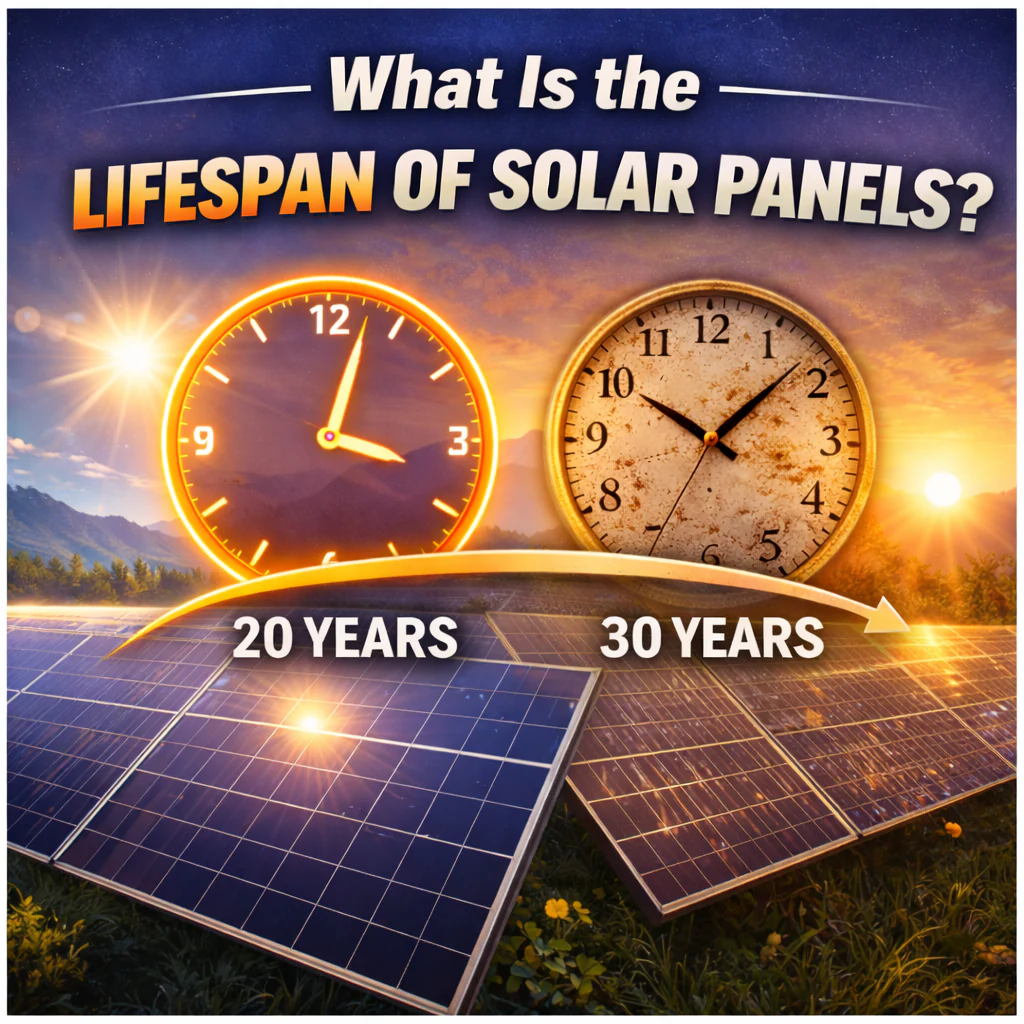
The solar industry standard for panel lifespan is 25 to 30 years. This doesn’t mean your panels stop working after that window. It means manufacturers guarantee a certain level of performance, typically 80% of original output or higher,for that duration.
After 25 years, most solar panels still produce electricity. They just produce less of it. A panel rated at 400 watts when new might output around 320 watts at the 25-year mark. That’s still a significant amount of free energy from a system with no moving parts and virtually zero operating costs.
Some high-quality panels from top-tier manufacturers have demonstrated functional lifespans of 40 years or more in real-world conditions. The technology is remarkably resilient. There are solar installations from the 1980s still generating power today, less efficiently than modern panels, but still working.
How Solar Panel Degradation Works
Solar panels don’t fail suddenly. They degrade gradually over time, losing a small percentage of their output capacity each year. This process is called the degradation rate, and it’s the single most important metric for understanding long-term panel performance.
The average degradation rate for modern solar panels falls between 0.3% and 0.8% per year. Premium monocrystalline panels tend to sit at the lower end, degrading around 0.3–0.5% annually. Budget polycrystalline panels typically degrade closer to 0.5–0.8% per year.
Here’s what that looks like in practice for a panel with a 0.5% annual degradation rate:
- Year 1: 100% output
- Year 5: approximately 97.5% output
- Year 10: approximately 95% output
- Year 15: approximately 92.5% output
- Year 20: approximately 90% output
- Year 25: approximately 87.5% output
At 0.5% per year, you’re still getting nearly 88% of your original capacity after a quarter century. That’s an exceptional return on investment, especially when you consider that the fuel source — sunlight — costs nothing.
What Causes Solar Panels to Degrade?
Several factors accelerate or slow the degradation process. Understanding them gives you control over how long your panels perform at their best.
UV exposure and thermal cycling. Ironically, the very thing that powers solar panels also contributes to their aging. Prolonged UV exposure gradually breaks down the encapsulant materials that protect the solar cells. Daily temperature swings — heating up during the day and cooling at night — cause micro-expansions and contractions in panel materials, which can lead to tiny cracks in solar cells over many years.
Moisture and humidity. Water intrusion is one of the biggest threats to panel longevity. Quality panels use robust sealing and tempered glass to prevent moisture penetration, but cheaper panels with inferior encapsulation can develop corrosion at the cell level. Humid climates demand higher-quality panel construction to maintain long-term performance.
Physical damage. Hail, falling branches, heavy snow loads, and debris impact can crack glass or damage cells. While modern panels are engineered to withstand significant impacts — most are tested against one-inch hailstones at 50+ mph — severe weather events can still cause damage that accelerates degradation.
Potential-induced degradation (PID). This is a voltage-related phenomenon that can reduce panel output in certain system configurations. It occurs when voltage leakage between the solar cells and the frame causes performance loss. High-quality panels with proper anti-PID treatment resist this effectively.
Light-induced degradation (LID). Most panels experience a small initial output drop, typically 1–3%, during their first few hours of sun exposure. This is a normal, one-time occurrence built into manufacturer performance projections. After this initial drop, degradation continues at the standard gradual rate.
Monocrystalline vs. Polycrystalline vs. Thin-Film: Lifespan Differences
Not all solar panel technologies age the same way.
Monocrystalline panels lead the pack in both efficiency and longevity. Made from single-crystal silicon, they offer the lowest degradation rates (0.3–0.5% per year) and typically come with 25-year performance warranties guaranteeing 84–92% output. They cost more upfront but deliver more energy per square foot over a longer period.
Polycrystalline panels use multi-crystal silicon and degrade slightly faster at 0.5–0.8% per year. They’re less expensive to manufacture, which makes them attractive for large installations where space isn’t a constraint. Lifespan is comparable to monocrystalline, though cumulative output over 25 years will be lower.
Thin-film panels have the shortest expected lifespan, generally around 10 to 20 years depending on the specific technology (amorphous silicon, cadmium telluride, or CIGS). They degrade faster and offer lower efficiency, but they’re lightweight, flexible, and perform better in low-light and high-heat conditions. For portable and temporary applications, thin-film can be a practical choice despite the shorter lifespan.
How Solar Generator Kits Fit Into the Longevity Picture
For homeowners and outdoor enthusiasts who want solar energy without committing to a full rooftop installation, solar generator kits offer a compelling alternative that also benefits from long panel lifespans.
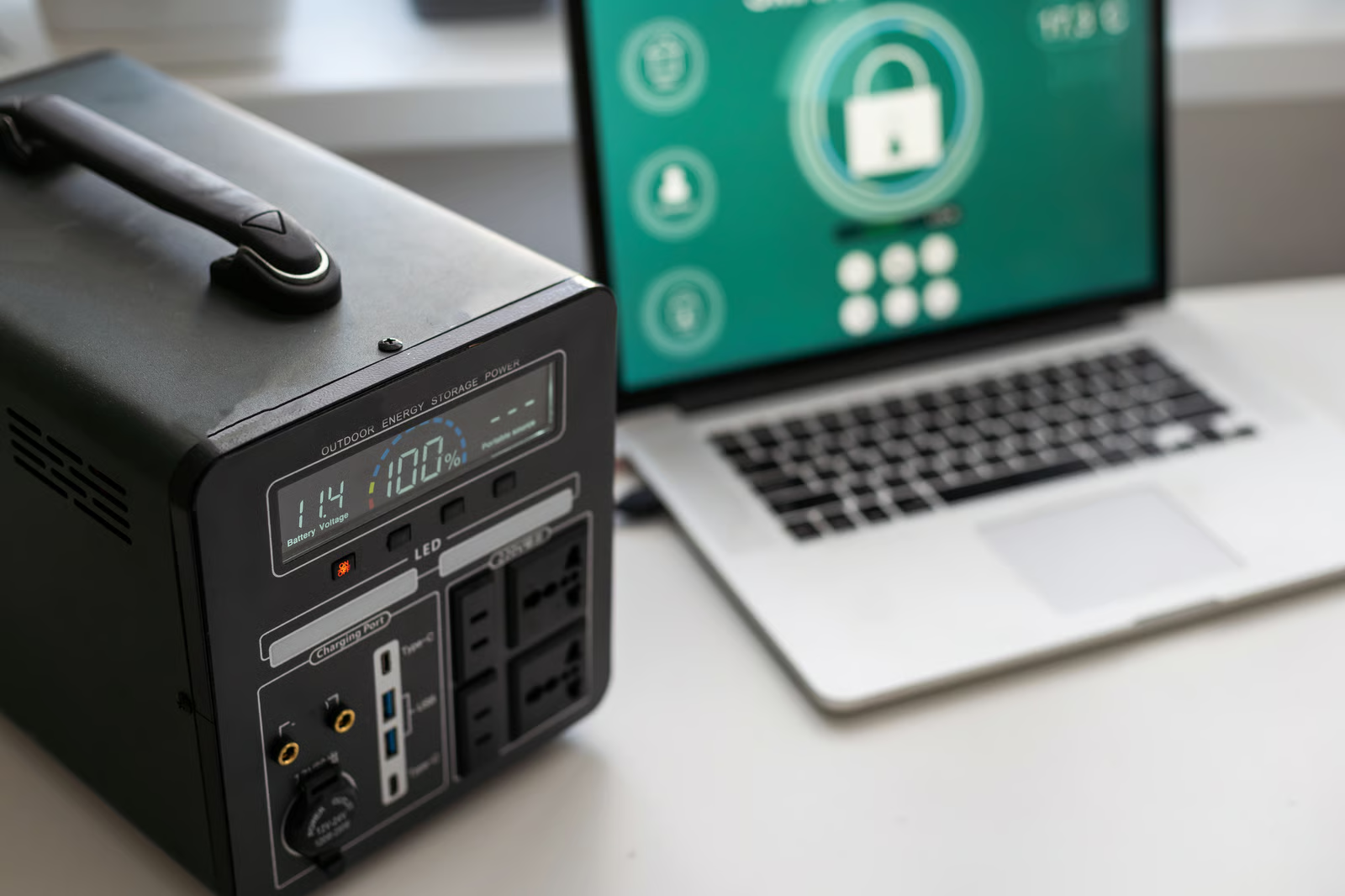
Solar generator kits bundle a portable power station with compatible solar panels into a single, ready-to-use system. The panels included in quality solar generator kits, typically monocrystalline, carry the same 25-year performance expectations as their rooftop counterparts. The difference is portability and flexibility. You can set them up for weekend camping trips, use them as emergency home backup, or deploy them at a remote job site and pack them away when you’re done.
Because the panels in solar generator kits aren’t permanently mounted on a roof, they often experience less long-term wear from environmental exposure. You can store them indoors between uses, protecting them from UV degradation, moisture, and weather events during downtime. This sheltered storage can actually extend functional lifespan beyond what fixed rooftop installations achieve.
The power station component, the battery and inverter unit, has its own lifespan measured in charge cycles rather than years. LiFePO4 batteries common in modern solar generator kits last 2,500 to 3,500 charge cycles before dropping to 80% capacity, which translates to roughly 7 to 10 years of daily use. The panels will outlast the battery by a wide margin, meaning you can upgrade your power station down the road while continuing to use the same panels.
This modular approach makes solar generator kits a smart long-term investment. You get decades of use from the panels and can swap out the battery unit as technology improves and prices drop.
How to Maximize Your Solar Panel Lifespan
You can’t stop degradation entirely, but you can slow it down and keep your panels performing at their best.
Keep panels clean. Dirt, dust, pollen, bird droppings, and leaf debris reduce output and can cause hot spots that accelerate cell degradation. Clean your panels two to four times per year, or after major storms. Use water and a soft cloth — avoid abrasive cleaners or pressure washers.
Ensure proper installation and ventilation. For fixed installations, proper mounting with adequate airflow behind the panels helps manage heat buildup. Panels that run too hot degrade faster. A few inches of clearance between the panel and the roof surface makes a measurable difference over time.
Monitor performance regularly. Modern solar systems and many solar generator kits include monitoring apps or displays that track output. If you notice a sudden drop in production that isn’t explained by weather or shading, investigate promptly. Early detection of issues like cracked cells, loose connections, or inverter problems prevents minor issues from becoming expensive ones.
Invest in quality from the start. Panels from reputable manufacturers with strong warranties and low stated degradation rates cost more initially but deliver significantly more energy over their lifetime. A panel that costs 20% more upfront but degrades 40% slower is the better deal by year 10.
Trim surrounding trees. Shade from growing trees reduces output and creates uneven heating across the panel surface, which can accelerate localized degradation. Keep nearby vegetation managed to maintain consistent sun exposure.
The Bottom Line
Solar panels are built to last, and the numbers back it up. With a standard lifespan of 25 to 30 years, degradation rates under 1% per year, and real-world examples lasting 40+ years, solar is one of the most durable energy technologies available.
Whether you’re installing a full rooftop system or investing in solar generator kits for portable, flexible power, you’re buying equipment that will produce clean energy for decades. The panels will almost certainly outlast your roof, your car, and most of the appliances they power.
Choose quality panels, maintain them properly, and your solar investment pays dividends long after it’s paid for itself.