
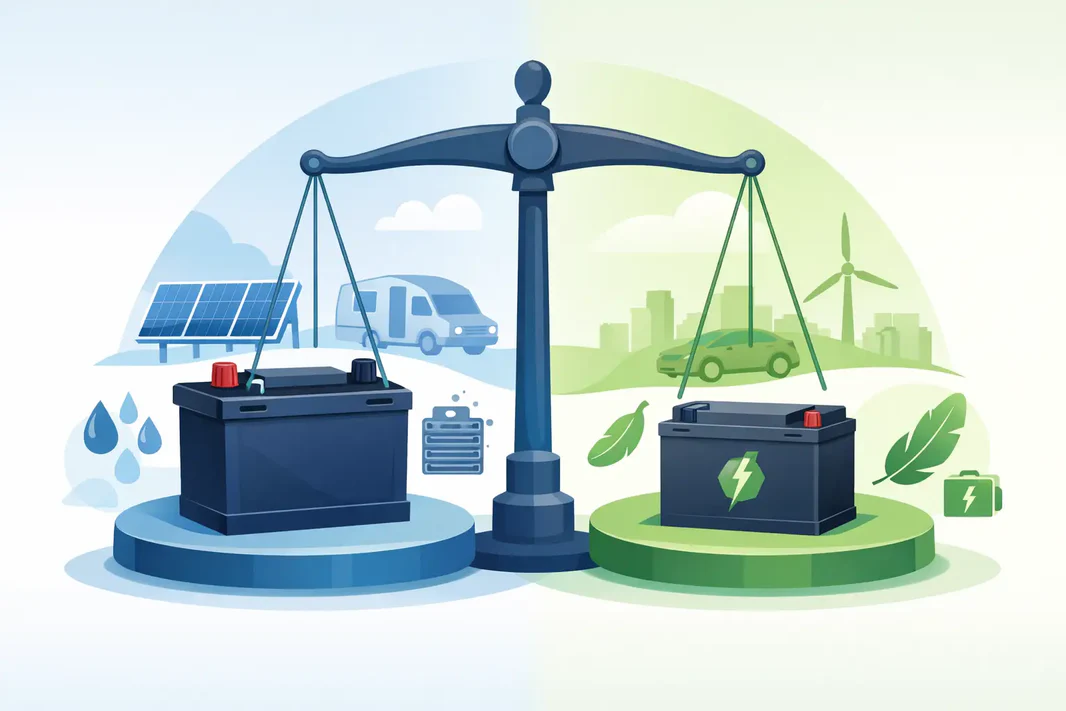
If you are shopping for backup power, RV power, marine power, or an off-grid setup, the deep cycle battery vs lithium question usually comes up fast. It should. Battery chemistry affects runtime, charging speed, usable capacity, maintenance, and how much weight you are willing to move around when the power goes out or the road starts calling.
The short answer is simple: lithium is usually the better performer, while traditional deep cycle batteries are usually the lower-cost entry point. The better choice depends on how often you use the system, how much power you need, and whether you care more about upfront savings or long-term value.
Deep cycle battery vs lithium: what is the difference?
A traditional deep cycle battery usually refers to a lead-acid battery designed to deliver steady power over a longer period. That includes flooded lead-acid and sealed options like AGM and gel. These batteries have been used for years in RVs, boats, solar banks, and backup systems because they are widely available and relatively affordable.
Lithium batteries in this category usually mean LiFePO4, or lithium iron phosphate. That chemistry has become the go-to option for portable power stations, solar setups, and premium battery backup systems because it is lighter, lasts longer, and handles deeper discharge much better than lead-acid.
Both types can power the same kinds of equipment. The difference is how efficiently they do it, how long they last, and how much effort they require over time.
Cost is where most buyers start
If you compare shelf price alone, lead-acid deep cycle batteries usually win. A deep cycle battery bank often costs less upfront than a lithium setup with similar advertised amp-hours. For buyers trying to get emergency backup in place on a tighter budget, that matters.
But upfront price is only part of the story. Lithium batteries generally last far more charge cycles than lead-acid batteries. They also let you use more of the stored energy without shortening battery life as quickly. A lead-acid battery might be rated at a certain capacity, but if you routinely drain it too far, its lifespan can drop fast. Lithium gives you more usable energy from the same rated capacity.
That means a lower-priced lead-acid option can still end up costing more over time if you cycle it often. If your battery will sit mostly in standby for occasional outages, the lower entry cost may still make sense. If you are using it every weekend in an RV or every day in an off-grid cabin, lithium usually starts looking like the smarter value.
Usable capacity is where lithium pulls ahead
This is one of the biggest real-world differences.
A lead-acid deep cycle battery generally performs best when you avoid draining it below about 50% of its capacity on a regular basis. Go much deeper too often, and you shorten its life. So a 100Ah lead-acid battery does not really give you 100Ah of practical daily use if you want it to last.
A lithium battery can usually be discharged much deeper without the same wear penalty. In many setups, you can use 80% to 100% of the rated capacity more confidently. So if two batteries have the same advertised amp-hour rating, lithium often gives you more usable power day to day.
That matters for outage planning. It also matters for overnight RV loads, trolling motors, solar storage, and any setup where every watt-hour counts.
Weight and space matter more than people expect
Lead-acid batteries are heavy. That may not be a dealbreaker for a fixed backup setup in a garage or shed, but it matters a lot in mobile applications. RV owners, van users, boaters, and campers feel that difference immediately.
Lithium batteries are much lighter for the same usable energy. They are also often more compact. That can free up storage space, reduce strain on a vehicle, and make installation easier.
If your power system needs to move with you, lithium has a strong advantage. If the battery is going to live in one place and rarely be touched, weight may not be the deciding factor.
Charging speed can change how useful the battery feels
A battery that takes too long to recharge can create headaches, especially during repeated outages or multi-day trips.
Lithium batteries generally charge faster than lead-acid batteries. They can accept higher charge rates and stay more efficient through the charging process. That means less waiting when charging from shore power, a generator, alternator, or solar array.
Lead-acid batteries charge more slowly, especially as they get closer to full. That slower top-off phase can be frustrating if you are relying on limited generator runtime or weak sunlight.
For homeowners using battery backup during storm season, charging speed can make a real difference between one outage and the next. For RV and off-grid users, it can mean less generator fuel burned and less downtime.
Maintenance and convenience
Flooded lead-acid batteries need the most attention. Depending on the design, they may require water level checks, proper ventilation, and more careful charging habits. AGM and gel options reduce maintenance, but they still carry the limitations of lead-acid chemistry.
Lithium batteries are much simpler to live with. They do not need watering, they hold voltage more consistently, and many include a built-in battery management system that helps protect against overcharging, over-discharging, and temperature issues.
For buyers who want a more set-it-and-forget-it solution, lithium is usually the easier choice. If you are comfortable maintaining a battery bank and want to keep costs down, deep cycle lead-acid still has a place.
Performance in backup and solar setups
For occasional home backup, both battery types can work. If your goal is to keep a few essentials running during short outages, a lead-acid deep cycle setup may be enough, especially if budget is the first priority.
For more demanding backup needs, lithium tends to fit better. It delivers more stable voltage, deeper usable capacity, and better cycle life. That makes it well suited for battery backup systems tied to inverters, portable power stations, and solar-ready systems that see regular use.
In solar applications, lithium has another advantage: charging efficiency. More of the energy collected by your solar panels ends up stored and usable. Lead-acid systems lose more energy in the charging process, which can matter when daylight is limited.
Deep cycle battery vs lithium for RVs, boats, and off-grid use
For RVs and boats, the answer often comes down to use frequency. Weekend users who want to lower initial cost may still be happy with AGM deep cycle batteries. Full-time RVers and heavier users usually benefit more from lithium because they cycle batteries more often and feel the impact of weight, recharge time, and usable capacity.
For off-grid cabins or solar-based independent power, lithium is often the stronger long-term fit. It handles repeated cycling better and pairs well with modern inverters and solar charge systems. If your setup supports daily charging and discharging, that longer cycle life matters.
For emergency preparedness, it depends on how you plan to use the system. If the battery is mostly insurance for occasional outages, lead-acid can be a cost-effective way to build some resilience. If you want a cleaner, lower-maintenance, faster-charging solution that integrates well with solar and portable backup gear, lithium is hard to beat.
When a deep cycle battery still makes sense
Lead-acid is not obsolete. It is still a practical choice for many buyers.
If you need the lowest upfront cost, use the battery occasionally, and do not mind extra weight or some performance trade-offs, a deep cycle battery can get the job done. It can also make sense for simple systems where high cycle life is not critical.
AGM deep cycle batteries remain popular because they are sealed, more convenient than flooded batteries, and familiar to a lot of RV and marine users. If your current charger and system are already set up for lead-acid, sticking with that chemistry can keep the upgrade simple.
When lithium is worth paying more for
Lithium is usually worth the premium if you use your battery often, need faster charging, want more usable capacity, or care about reducing weight. It also makes sense for buyers building a modern solar-ready setup and wanting longer service life with less hassle.
That is why lithium is increasingly common in portable power stations, higher-end backup systems, and serious off-grid builds. The upfront investment is higher, but the daily experience is better in most use cases.
If you are comparing products for your next power setup, it helps to think beyond battery chemistry alone. Consider your inverter, charging source, solar input, expected runtime, and how often the battery will cycle. At GenVault, that bigger-picture approach usually leads to a better purchase than chasing the lowest price on a spec sheet.
The right battery is the one that fits how you actually live and use power. Buy for the outages, trips, and charging conditions you expect most often, and you will be a lot happier with the system when it really counts.